
The Fall of the Wild

One of the world’s last wild places, the sprawling boreal region is a breeding bird nursery that supports more birds than anywhere else on earth. So why is so much of it turned into catalogues and junk mail?

by Jeffrey Wells


We took off from the wilderness lodge at Miminiska Lake in northern Ontario’s Albany River watershed with all our gear stowed in a big Twin Otter float plane. I was here to document, in sound recordings, a still pristine part of Canada’s boreal forest before it is lost. That forest, which stretches from coast to coast across northern Canada, is one of only three or four forested ecosystems left on earth where vast tracts of habitat remain untouched. Its half a billion hectares represents fully a quarter of the world’s uncut forests and is home to massive numbers of birds.

Read the full article…

Incredible Journeys

Incredible Journeys

The razing of the world’s forests has turned the marathon migration of our boreal songbirds into a race for survival. Saving the birds will mean protecting habitat at both ends of the voyage

by Bridget Stutchbury


A palm tree in northern Ontario waving its massive fronds in the gusts of a cold May wind? This unlikely image popped into my mind on southwestern Ontario’s Pelee Island last spring, as the wind howled across Lake Erie and I caught a glimpse of a small yellowish brown warbler at the edge of a sheltered clearing. The tail wagging and conspicuous rufous cap gave it away – unmistakably a palm warbler, which overwinters in the southern United States and the Caribbean, and was on its way north to the Canadian boreal forest. The names of other boreal birds may also strike you as odd: Connecticut warbler, Philadelphia vireo, Cape May warbler, Nashville warbler, Tennessee warbler and magnolia warbler, the last one named in Mississippi after a southern tree. All were described during fall or spring migration by ornithologists who had little idea where these intrepid travellers lived during the rest of the year.

Migratory songbirds are citizens of two worlds – a Canada warbler feels as much at home singing boldly from a dense thicket of spruce trees as it does a few months later looking for insects in a rainforest in Colombia alongside resident tropical gnatcatchers, forest elaenias and white-winged tanagers, as well as other migrants such as the Blackburnian warbler. Migratory songbirds depend on lush forests in both their wintering and summering grounds, to fatten up for their arduous, biannual journeys. They also require “bird hotels” along the way – forest stands where they can stop to rest and refuel. But destruction of songbird habitat – in the north, south and along migratory routes – has made their already challenging lives all the more difficult.

Results from the Breeding Bird Survey (BBS), migration monitoring at bird observatories and the Ontario Breeding Bird Atlas project show that dozens of species of migratory songbirds are in trouble. We should be very worried that the numbers of birds as diverse as olivesided flycatchers, Canada warblers and Swainson’s thrushes, just to name a few, have plummeted since we began counting them in the 1960s. The BBS in Canada shows that, from 1966 to 2007, Canada warblers declined by 2.6 percent a year and olive-sided flycatchers by 3.7 percent a year, a cumulative and stunning loss of 50 and 75 percent, respectively, within my own lifetime. The Committee on the Status of Endangered Wildlife in Canada (COSEWIC) recently listed both species as threatened, and they are on the Audubon Society’s Watch List.

These and other migratory songbirds are modern-day canaries in the coal mine, only, in this case, the “coal mine” stretches for some 10,000 kilometres. At one end is the Canadian boreal forest, home to three billion migratory songbirds and a quarter of the world’s intact forests. Those trees, an enormous storehouse of carbon, are critical to the survival of our planet in this era of climate change, yet almost one million hectares are cut each year. At the other end, Latin American countries have been clearing about four million hectares of tropical forest each year. The dramatic decline in migratory songbirds warns us that our forests are under siege, and that we urgently need to protect what remains to help songbirds and, ultimately, ourselves.

My work as a researcher of migratory birds dictates that I follow the songbirds on their journey, to understand the threats they encounter along the way. I admit I have been spoiled by many years of working in central Panama, where there is still extensive lowland rainforest near the canal and adjacent national parks. Outside of these protected areas, though, little rainforest remains. The same is true for the region near the small town of San Isidro, in southern Costa Rica, where I am now collaborating on a win-win project to restore forested habitat, save songbirds and help coffee farmers.

San Isidro is home to the Alexander Skutch Biological Corridor. Alexander Skutch pioneered the study of tropical birds and lived near San Isidro; his former home, Los Cusingos, is now a Neotropical Bird Sanctuary and the site of a migratory bird monitoring program that the Faculty of Environmental Studies at York University and I run. On my first visit to the sanctuary a few years ago, I was surprised to see that Los Cusingos is a small, isolated forest patch surrounded by sugarcane fields and coffee plantations. If you are game for a long, bumpy car ride, twisting past recently cleared forests that are now cattlefilled pastures, you can visit large uncut forests still standing far up the valley in Chirripó National Park and the adjacent Las Nubes Biological Reserve.

For the past three years, local residents, banding experts and York University students have been banding migrants in the Alexander Skutch Biological Corridor. A central figure in this project is coffee grower and naturalist Luis Angel Rojas, who has a small house across the river from Los Cusingos. He became an avid bird lover when binocular-toting students began visiting the forest reserve, and he saw his first field guide to the birds of Costa Rica. Rojas owns one of the few shade-coffee farms in the region and proudly grows his beans under native tropical trees and without pesticides.

We selected netting sites in mature rainforest and coffee plantations so we can find out how migrants use these different habitats and to what extent they hopscotch between isolated patches. About 10 to 15 species common to Ontario’s boreal forest in summer use scattered fragments of habitat in the Skutch corridor, where they fly into the nets hidden among the shrubs and trees. Some species of migrants live here all winter, such as Tennessee warblers and chestnut-sided warblers, but most rely on the remnant forests as bird motels during spring migration. In 2007, we caught only two dozen Swainson’s thrushes in January and February, as few overwinter in the region, but we banded over two hundred individuals in April when migration was in full swing.

But the razing of forests around the Skutch corridor has been both hard on these birds and typical of what has been happening in Latin America. More primary rainforest has been cleared since 1950 than during the entire two hundred years that came before. In countries at the northwestern corner of South America, where many boreal songbirds overwinter, total forest loss stands at 70 percent or more.

Hot Zone

The boreal forest by the numbers

200

Number of bird species worldwide that may disappear within the next 20 years.

300

Number of bird species that breed in Canada’s boreal forest.

500

Number of breeding pairs of migratory birds that one square mile (2.5 square kilometres) of the boreal forest can support.

One-third

Proportion of the Canadian boreal region allocated to forestry companies.

186 billion tonnes

Amount of carbon stored in the Canadian boreal forest and peatland ecosystems.

11%

Percentage of the world’s terrestrial carbon stored in Canada’s boreal forest.

49%

Percentage of Ontario’s boreal forest that is managed Crown land.

8%

Percentage of Canada’s boreal forest protected from development.

16%

Percentage of Canada’s total greenhouse gas emissions released by logging.

33 million tonnes

Amount of carbon released into the atmosphere annually due to logging in Canada.

59%

Percentage of Ontario’s total woodlands that is made up of boreal forest.

729,000 hectares

Estimated area of boreal forest logged in Ontario between 2004 and 2007.

62,000

Length in kilometres of the logging roads that run through Ontario’s southern boreal forest.

9%

Percentage of Ontario’s boreal forest that is within parks and protected areas.

5%

Percentage of Ontario’s northern boreal forest that is designated as protected.

50%

Percentage of the northern boreal region the Ontario government promises to protect.

Most

Amount of Ontario’s southern boreal forest outside of provincial parks slated to be clearcut within the next 100 years.

Sources: Boreal Songbird Initiative; Bird Studies Canada; Ministry of Natural Resources; Priorities for Ontario; Audubon

In House

Our Donors

Transat A.T. Inc.

transatIn November, Ontario Nature entered a partnership with Transat A.T. Inc., one of the world’s largest integrated tourism companies. Transat is generously supporting Ontario Nature’s Discover Ontario’s Natural Heritage project to protect and restore 21 unique nature reserves across the province. This project combines the conservation of wildlife and natural habitats with the promotion of sustainable tourism. It also includes the creation of marked trails, maps, boardwalks and interpretation panels that facilitate public access to Ontario Nature’s reserves while ensuring minimal impact on the environment.

“We are very excited to be in a partnership with Transat, a company that is committed to sustainable tourism,” says Caroline Schultz, executive director of Ontario Nature. “We have a long history of connecting people with nature and conserving precious habitat, and Transat’s support helps us realize these extremely important conservation goals.”

Transat has offices in eight countries, including Canada and across Europe, and its 6,000 employees send more than 2.5 million travellers to over 60 countries annually. As part of its sustainable tourism initiative, Transat provides financial support to a select group of community and nonprofit organizations to develop projects that are beneficial to the environment and support local tourism. Ontario Nature was one of four organizations worldwide to receive funding from the tourism company in 2008. “We are proud to contribute to these four initiatives by local communities in countries that welcome travellers,” says Lina De Cesare, president of tour operators and chair of the Transat’s Sustainable Tourism Executive Committee. “Once again this year, we see that communities everywhere are developing sustainable tourism projects that deserve support and encouragement.”

Ontario Nature has been protecting vulnerable and rare habitats since 1961. All of Ontario Nature’s reserves are open to the public and contain uncommon and endangered species such as blue racer snakes, ram’s-head lady’s-slippers and red-headed woodpeckers. Many of the organization’s popular Volunteer for Nature trips include visits to the reserves to learn more about conservation and wildlife.

“Our reserves protect some of the most ecologically important habitats in Ontario,” says Mark Carabetta, Ontario Nature’s conservation science manager. “It’s wonderful to be able to take people out to the reserves so that they can experience these spectacular places first-hand.”

Click for more information about Ontario Nature’s reserves and the expanded 2009 Volunteer for Nature program.

Our Clubs

Hamilton Naturalists’ Club

The Hamilton Naturalists’ Club (HNC), which turns 90 this year, has much to celebrate. Founded as the Hamilton Bird Protection Society in 1919, HNC, whose mandate is to protect nature and promote public awareness and appreciation of the natural environment, now has almost 700 members. HNC members helped form Ontario Nature, then called the Federation of Ontario Naturalists, in 1931.

The group has had numerous environmental successes, starting with the designation of Cootes Paradise as a wildlife sanctuary in 1927. In 1961, HNC was the first naturalist organization in Ontario to buy a nature sanctuary. Then-HNC director Marion Shivas negotiated the purchase of the 38-hectare Spooky Hollow Nature Sanctuary for $4,500. HNC has since added 28 hectares to the property and acquired or agreed to protect three other properties, totalling nearly 50 hectares of wetland, Carolinian forest and meadow marsh. To date, HNC has raised more than $600,000 for the preservation of natural areas.

This club, which was also one of the first to create a junior naturalists’ club (the Junior Audubon Club of the Hamilton Bird Protection Society), has hosted Christmas Bird Counts for 77 years; completed the first natural areas inventory of Hamilton, in 1991; and published The Reptiles and Amphibians of the Hamilton Area in 1994, making HNC the first naturalist society in Canada to conduct and complete its own reptile and amphibian atlassing project.

HNC will mark its anniversary with a series of events in the Hamilton and Burlington area. In March, the club will lead a trip to the Long Point Biosphere Reserve; in May, the junior naturalists’ club will host a family fun day; a paddle trip in Cootes Paradise and an excursion to Short Hills Nature Sanctuary will take place in August and September. The club will finish its anniversary year with a wine and cheese fundraising event and silent auction in October.

This year, HNC has set itself a fundraising goal of $90,000 to celebrate its anniversary. The Head-of-the-Lake Land Trust, HNC’s natural areas protection program, is coordinating a campaign to find 90 people, each of whom would commit to a donation of $1,000 toward HNC’s next green space project.

To find out more about this vibrant club, visit the HNC website at www.hamiltonnature.org.

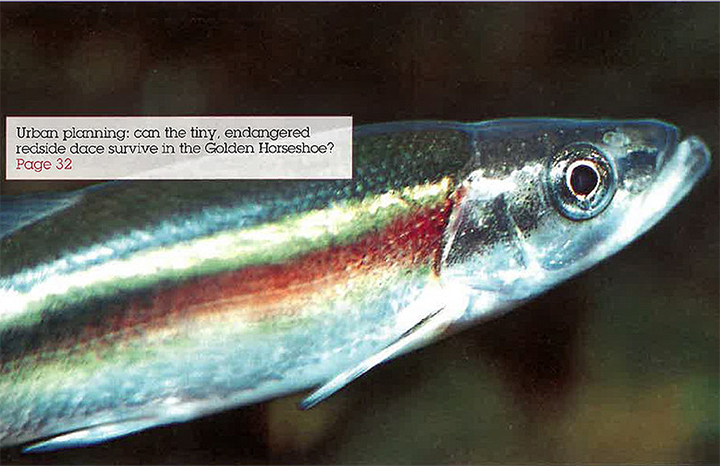
A Fish in the City

Redside dace

Can efforts to protect an endangered minnow change the way we build communities?

by David Lees


The west branch of Huttonville Creek, a tributary of the Credit River, churned through a narrow gully just off the shoulder of a country road in Brampton. Willows leaned over the banks, and meadow grasses trailed in its flow. The first snowfall of November lay on the surrounding fields, and the fish in the stream – creek chub, white suckers, common shiners, the blacknose dace and, most particularly, the endangered redside dace – had retreated to the depths of shallow pools to wait out winter. For the moment, they were safe because the stream, although it might crust over with ice, is fed by relatively warm groundwater and does not freeze to the bottom. Mark Heaton, a soft-spoken biologist with the Ontario Ministry of Natural Resources (MNR), had brought me to the creek to show me a typical habitat for the redside dace. Read the full article…

Return of the Raptors

Return of the raptors

A guide to the great hawk migration

by Mark Stabb


From a clifftop high above the town of Grimsby, the CN Tower is a toothpick on the northern horizon across Lake Ontario. Below this Niagara Escarpment ridge, vehicles hum along the Queen Elizabeth Way (QEW) like toy cars. Then, on an updraft of wind, less than 30 metres away and appearing almost larger than life, a red-shouldered hawk flies by, soon followed by another, then three turkey vultures, then a red-tailed hawk and, later, an early Cooper’s hawk. On yet another Easter weekend at Beamer Memorial Conservation Area, one of my favourite hawk-watching sites, the annual northerly parade of raptors is building and will soon be in full flight. Read the full article…

Natural Inns

Ontario Nature’s reserves provide a much needed rest stop for tired avian travellers

by Mark Carabetta


They offer a restful night’s sleep in a forest canopy, an early morning breakfast of juicy caterpillars and a cool, fresh drink from a stream or wetland. Ontario Nature’s 21 reserves – more than 2,000 hectares of protected land across southern and eastern Ontario – provide much-needed pit stops and even nesting habitat for millions of migratory birds that travel between tropical winter homes and their summer nesting grounds in Ontario.

Ontario Nature began protecting land in 1961, when it acquired the Dorcas Bay Nature Reserve on the Bruce Peninsula. Since then, Ontario Nature has been steadily building its system of nature reserves through purchases, donations and bequests of ecologically significant lands.

Some nature reserves serve as important stepping stones – pockets of forest cover within urban and agricultural areas and even on islands in the Great Lakes. Stone Road Alvar on Pelee Island, Willoughby Reserve in Caledon, Cawthra Mulock Reserve in King Township and Lawson Reserve south of Ingersoll are all critical stopovers and offer birders in southern Ontario an opportunity to view boreal birds during migration. Many warblers – including the palm, Tennessee, bay-breasted, Canada and blackpoll – will spend a night recharging in these forest canopies before continuing northward to Ontario’s vast boreal forest. The best time to see such birds is in early spring, just as deciduous trees are beginning to leaf.

Still other migratory birds make nature reserves their destination. The black-throated blue warbler, ovenbird, blue-headed vireo and scarlet tanager all nest in Ontario Nature’s reserves. Ontario Nature’s larger reserves – Altberg Wildlife Sanctuary in the City of Kawartha Lakes (471 hectares), Kinghurst Forest in Grey County (280 hectares), Lyal Island in Lake Huron (305 hectares) and Quarry Bay on Manitoulin Island (391 hectares) – offer these birds large tracts of unfragmented, interior forest habitat.

The black-throated blue warbler’s recent recovery in southern Ontario underscores the importance of protecting and restoring such intact forested areas. By the late 1900s, after widespread clearing of, mature tracts of deciduous forests for agriculture and urban development, the black-throated blue warbler was almost completely absent as a breeding bird south of the Canadian Shield and Bruce Peninsula. Recent data indicate, however, that the warbler is once again nesting in southern Ontario, along the Niagara Escarpment and the Oak Ridges Moraine, and in other areas with intact forest. To that end, Ontario Nature is seeking to add more land to its existing reserves and establish new ones that protect imperilled and vulnerable habitats in Ontario.

All the reserves are open to the public. Click to learn more about Ontario Nature’s reserves.

WHAT YOU CAN DOWe may catch only a glimpse of boreal songbirds as they migrate between their wintering grounds in Latin America and the boreal forest, but we can still affect their ability to survive through our actions and purchases. Here’s how all of us can protect boreal songbirds at home:

Reduce fuel consumption. The Alberta tar sands are a few of many petroleum-extraction projects that are responsible for large-scale habitat destruction. According to a report by the Natural Resources Defense Council, the Boreal Songbird Initiative and the Pembina Institute, these projects could be responsible for the deaths of 160 million birds over the next few decades. By reducing our fuel consumption, we reduce the demand for oil from tar sands.

Buy organic. Many of the fruits and vegetables found in a typical grocery store are grown using harmful pesticides, which are bad for us and bad for birds. Look for organic food options; many are produced locally, so eating organic can also mean reducing fuel consumption.

Buy shade-grown coffee. Most mass-produced coffee is grown in sun-drenched fields – often the result of extensive clearcutting – and heavily treated with fertilizers and pesticides. Shade-grown coffee operations provide healthy canopies for birds, often in areas where there is little forest cover.

Use Forest Stewardship Council (FSC) certified paper products. While reducing the use of paper products is the most effective way to prevent logging boreal habitat, FSC certification is proof that lumber is logged in a responsible and sustainable manner.

Sign the “Save Our Boreal Birds” petition. Over 55,000 people from Canada and around the world have already made it known to the Canadian government that it needs to protect more of the boreal forest for the billions of birds that depend on it. Join us and sign the petition at www.saveourborealbirds.org/sign.html

Jim MacInnis


Mark Carabetta is Ontario Nature’s Conservation Science Manager.

Salamanders

field_trip_salamanders

by Dan Schneider and Peter Pautler


Salamanders are perhaps the most elusive of the amphibians – they are rarely encountered after spring breeding – yet they outnumber all other vertebrates that inhabit our forested areas. Eleven species, representing four families in the order Caudata, live in Ontario, where there are more salamander species than in any other province in Canada. This abundance reflects Ontario’s proximity to the place from which salamanders first emerged, deep in the southern Appalachian Mountains of eastern North America. When the last of the glaciers retreated and the climate stabilized, salamanders gradually migrated northward into new habitats. Read the full article…

Red-headed woodpecker

Red-headed woodpecker

A once common species in southern Ontario, sightings of this feisty, crimson-hooded bird have become increasingly rareby Tim Tiner

t_lubhe red-headed woodpecker, even within its highly intriguing family, is an unusual character. The most scrappy, omnivorous and versatile of North American woodpeckers, the crimson-hooded bird is loud, bold and conspicuous, often perching on dead branches, posts and telephone wires. Yet, the once common denizen of southern Ontario is becoming so rare that few people in the province have ever seen one.

ProfileScientific name: Melanerpes erythrocephalus (from Greek words meaning, respectively, black and red-headed)Length: 19.523.5 cm

Weight: 5590 grams

Breeding territory: 38.5 ha

Drumming rate: 1925 beats per second

Nest hole entrance: 5.56 cm wide

Average clutch: 47 eggs

Incubation period: 1214 days

Fledging age: 2730 days

Tail and toes: To cling to tree trunks, the red-headed woodpecker has sharp claws like grappling hooks, two pointing forward and two pointing backward (some other woodpecker species have only one rear toe). Like others in its family, the bird props itself against tree trunks with its stiff, pointy tail feathers.

Red-heads have been little studied, so much remains unknown about them, including the reasons for their decline. The Committee on the Status of Endangered Wildlife in Canada (COSEWIC) assessed this species as threatened in 2007, and Ontario has listed it as a species of special concern for the past dozen years.

Red-headed woodpeckers breed across the eastern and central United States and in southern Ontario, and also reach the southern fringes of Manitoba, Saskatchewan and, until recently, Quebec. Central to their needs are patches of large, dead, partly debarked trees or limbs, in which the birds excavate nest holes (over a period of about 12 to 17 days) and search for wood-boring beetles. However, red-heads mostly catch insects by hawking in the air like a flycatcher, often from a perch over open areas. They also probe the ground for ants like flickers do, feast on grasshoppers in August, slurp from the drillings of sapsuckers and occasionally prey on eggs, nestlings, small birds and even the odd mouse.

But two-thirds of the red-head’s diet is vegetable matter, including berries, wild cherries and, above all, beechnuts and acorns. A few turn up at feeders during mild winters in extreme southern Ontario, but most migrate south between late August and mid-October, settling between the Great Lakes and the Gulf of Mexico, wherever they find forests with ample supplies of acorns and nuts. They are one of the few woodpeckers that store their food, smashing nuts and then cramming bits into tree holes and crevices. The birds guard their stash vigilantly on their small winter territories.

But these singular birds have been on a roller-coaster ride since the start of European settlement. Initially, they seemed to thrive from the opening of vast forests, expanding from snag-tangled riversides, beaver ponds and pockets of oak savannah to take advantage of the new landscape of rural woodlots interspersed with pastures, fencerows and orchards. In the 18th and 19th centuries, even towns and city parks rang with their brief, two- or three-part, beak-hammering territorial rolls and the loud, highpitched, repeated mating calls of males in early May. Males and females, unlike other woodpeckers, are identical, flying from one tree to the next while courting, taking turns peeking at each other from opposite sides of the trunk.

In the early 20th century, the numbers of this species fell steeply as the beech forests it depends on in fall and winter dwindled, and snags and dead branches were routinely removed from parks and woodlots. Populations recovered somewhat from the 1950s to the 1970s due to the bounty of dead trees left by chestnut blight and Dutch elm disease. Local densities sometimes increased five- to 13-fold in parts of the United States after mass elm die-offs, but the numbers dropped again as those trees fell. The continent’s population now stands at a third of estimates in 1966, when the annual North American Breeding Bird Survey began.

In Ontario, the red-head seems in full retreat. The province’s first bird atlas project between 1981 and 1985 found the species fairly consistently throughout most of southern Ontario, to the edge of the Canadian Shield. Just 20 years later, the second atlas noted that breeding-season sightings were down 64 percent, with red-heads turning up in about half as many localities, most close to Lake Ontario and Lake Erie. The provincial population, estimated at 3,400 pairs in 1994, fell to between 660 and 990 pairs in 2007. The bird also largely disappeared from the southern Canadian Shield, though some 30 to 50 pairs still breed in the Lake of the Woods area.

P. Allen Woodliffe, the Ministry of Natural Resources Aylmer district ecologist, remembers Christmas Bird Counts in the early 1980s recording up to 114 red-headed woodpeckers at Rondeau Provincial Park on Lake Erie.  “In last year’s [2007] Christmas counts, nowhere in Canada got more than one,” says Woodliffe. “Only two were seen in all of southwestern Ontario.”

The demise was long blamed on starlings, an alien species that aggressively usurps the nest holes of many native birds. But the feisty red-heads usually win out in competition for nesting places or food, driving off starlings, notoriously pugilistic blue jays and kingbirds, and even crow-sized pileated woodpeckers.

More likely causes of the population decline are modern farming practices that raze hedgerows, along with the closing in of regenerating forests and the spread of beechbark disease. Cars frequently kill the birds as they search for insects at roadside forest edges. One of the last redheaded woodpeckers seen nesting in Quebec was found dead several years ago on a roadside north of Montreal, says Carl Savignac, an independent biologist who wrote the COSEWIC assessment report on the species in 2007.

Savignac is conducting the first experimental study ever to create habitat for endangered woodpeckers, funded by Environment Canada’s Habitat Stewardship Program. He enlisted organic farmers and other ecologically conscious landowners at six sites on the Quebec side of the Ottawa Valley last year to create snags, by girdling patches of 15 to 20 aspens, which are plentiful, fast-growing, thin-barked softwoods that accommodate red-headed woodpeckers more readily than slower-to-decay hardwoods. Another six sites will be established this year. With such habitat, says Savignac, “the probability of colonization from active nests on the Ontario side of the Ottawa River is quite high.”

If the federal environment minister accepts COSEWIC’s recommendation to officially list the bird as threatened - a decision is expected by the end of 2009 - the Ontario region branch of the Canadian Wildlife Service will take the lead in developing a recovery plan for the species.

In your backyard

Suet is the favourite fare of most woodpeckers at winter feeders. Nuts are also popular. In particular, red-headed woodpeckers seem to fancy peanut butter and sunflower seeds. Flickers, yellow-bellied sapsuckers, and downy and red-bellied woodpeckers will also eat bread, while hairy woodpeckers seem to go for almost everything, including fruit and seeds. In the spring, flickers, downy woodpeckers and, occasionally, red-headed woodpeckers can be enticed to nest in backyard bird boxes placed two to six metres up on dead trees or poles.


contribs_tinerTim Tiner is the author of several nature guide books and a longtime contributor to ON Nature.

Did you know?

  • According to IT research nonprofit organization CANARIE Inc., the Internet is the fastest growing source of CO2 emissions worldwide. Read the full article…

My Turn

Jeff Howard: water keeper

As told to Jim MacInnis

My whole life I’ve watched the water. I love solid ground – I hike, ski and even race mountain bikes in the summer – but I live near Big Bay Point in Innisfil, which juts sharply out into Lake Simcoe, so it’s the water to which I’m drawn. Read the full article…

Killer bees


by Jim MacInnis

Nearly one-third of the food we eat is a result of pollination by insects, so the widespread disappearance of wild bee populations has been triggering alarm bells around the world. Concern for the insect’s demise has been heightened further because scientists have been unable to determine the cause of its decline. A recent University of Toronto study, however, has provided some possible answers, suggesting that an intestinal parasite common in bees raised commercially is at least partly to blame. Read the full article…

The last road trip

by Jim MacInnis

The largest piece of refuse you will probably ever throw away is your car. Every year, half a million vehicles are taken off Ontario roads as a result of age or collision damage and sent to auto dismantlers. In most cases, 75 percent of a car’s parts can be recycled; the remainder (mostly plastics, but can also contain mercury and liquid freon from air conditioners) ends up in a landfill. Because no single agency is responsible for monitoring end-of-life vehicle (ELV) dismantling practices in Ontario, it is impossible to determine how much hazardous material from rusting auto parts is released into the air or seeps into the ground and waterways. Read the full article…

Green as gold

by Amber Cowie

Established in 2005, the Ontario Greenbelt that surrounds the province’s Golden Horseshoe is 728,400 hectares of protected lands, watersheds and communities. The environmental benefits of the Greenbelt are many and, as recent studies confirm, so are the economic and social benefits. Read the full article…

Up in smoke

by Conor Mihell

Over a mere 10-year period, Vale Inco’s Copper Cliff smelter has showered Sudbury with a staggering 674 tonnes of carcinogenic nickel particulates – the equivalent of about 850 pickup truck loads. Now the mining giant is asking for relief from new Ontario Ministry of the Environment (MOE) regulations for air quality, which come into effect in February 2010. Inco claims it will not be able to afford to install the required emissions-monitoring equipment at its Copper Cliff smelter to meet the MOE’s start date; instead, the company has applied for an alternative standard of emissions that allows for levels that are more than seven times higher than the one in the new provincial regulation. Read the full article…

Kevin Shackleton

Ontario Nature board member and birding enthusiast seeks pledges for his 16th Baillie Birdathon! Read the full article…

Recycling waste

by Jim MacInnis

As is the case in so many sectors of the economy, the business of selling recycled material has an uncertain future as supply outstrips demand. Read the full article…

Wasp eats beetle

by Sharon Oosthoek

A wasp native to Ontario may soon be pressed into service as a lead investigator into potential infestations by emerald ash borers. Read the full article…

Chemical imbalance

by Sharon Oosthoek

Two dominant and much discussed threats to the boreal forest are industrial interests and logging. Now another threat has surfaced. According to researchers from Queen’s and York universities, lakes in the forest are suffering from “aquatic osteoporosis” due to declining calcium levels. Read the full article…

A page turner

I found the Winter 2008/2009 issue of ON Nature very interesting, especially the broad focus on the variety of species in peril and the ways in which they are being helped (e.g., Allan Britnell’s “Seeds of hope”). I found it ironic, however, that Tim Tiner’s “Dump debacle” closely precedes the full-page ad on page 11!
John Howden,
Whitby

Silent springs

Our family has owned a farm in Flesherton, Ontario, for about 45 years. In the early years, when our children were young, the summer air was filled with insects, butterflies and bees. In the spring our apple trees were literally humming with bees and other insects. When our children collected butterflies for school projects, it was easy to collect 15 to 20 different varieties in an hour. Today, however, our apple trees are lucky to have three to four bees and there is a silence in the spring. The only butterflies around are a few cabbage butterflies and one or two monarchs. There are not even that many mosquitoes or houseflies.

Many Grey County farms are not farmed anymore and one would expect more, not fewer insects. I wondered if it was because of the regular spraying of apple orchards near Thornbury and Meaford, but those are 40 to 60 kilometres north of our farm. We all know the bees have had a hard time, but all insects seem to be in trouble. Is our experience atypical?

As naturalists we tend to be bird-centric. But if our insect population is collapsing, it will no doubt have serious repercussions on our insect-eating bird population. Perhaps we should consider the merits of having annual insect surveys à la bird censuses.
Matthew Gaasenbeek, Former President of Ontario Nature,
Toronto

In House

Nature’s economy

by Caroline Schultz

As a billion birds are winging their way northward, many of us are feeling the tug of migration hot spots such as Point Pelee, Long Point, the Leslie Street Spit, the tip of the Bruce Peninsula, Thunder Cape and Prince Edward Point, and of green stop-offs – local woodlands, wetlands and backyards. There we know we will soon find beautiful biological light at the end of this cold and economically gloomy winter.

Spring birding is often focused on those small but flashy songbirds of May – avian jewels such as indigo buntings, scarlet tanagers, rose-breasted grosbeaks and yellow-rumped, magnolia and Cape May warblers. But these are the latecomers. The first migrants include waterfowl such as the tundra swans that descend like a snowstorm on the Long Point area from mid to late March. Ducks and geese soon join this flurry along the lower Great Lakes – hence the timing of the annual Waterfowl Festival at Presqu’ile Provincial Park in late March. Raptors, too, begin to arrive in March. Mark Stabb’s article, “Return of the raptors,” will inspire birders and birders-to-be to get an early taste of spring by heading to a key hawk-watching spot like Beamer Memorial Conservation Area in Grimsby.

The return of the birds, though, reminds us of their plight. Bridget Stutchbury’s article documents the decline of many boreal songbirds and the challenges that boreal-nesting species encounter along their migratory routes due to habitat loss and other hazards. The call is clear. These birds depend on adequate protection in our boreal forests to give them the best chance of surviving.

Birds returning this spring are coming back to a country and province sobered by the financial crisis and the spectre of a long economic recession. The events that triggered the crisis, such as the folly of sub-prime mortgages, send a message that we cannot spend more than we can afford – as nations or as individuals. We need to learn the same lesson when it comes to squandering our natural capital. Forests, wetlands, waters and wildlife provide us with goods and services essential to life – clean water, clean air, pollinators, the capturing and storing of carbon, to name a few. When we rob nature’s bank of its capital by extracting more resources in an unsustainable way, emitting more greenhouse gases into the atmosphere and paving over natural areas, we lose in the long run.

So let’s take a lesson from the birds and from the mistakes we have made and begin investing in nature and rebuilding our natural capital to sustain us and the diversity of life we depend on. We can also recession-proof ourselves by staying closer to home this year and enjoying what nature in Ontario has to offer – starting this spring with bird migration.

Caroline Schultz

Caroline Schultz is the executive director of Ontario Nature.

Contributors

Bridget StutchburyIn her feature, “The incredible journey,” Bridget Stutchbury, a professor at York University, describes the disturbing decline of Ontario’s songbirds. “What makes boreal songbirds so mysterious and interesting to write about is that many of us see them only fleetingly during their amazing migration.” Stutchbury’s articles have appeared in The New York Times and National Wildlife. Her book, Silence of the Songbirds, was a finalist for the Governor General’s Award in 2007.

contribs_wellsJeffrey Wells is director of science and policy for the Boreal Songbird Initiative. In his article, “The fall of the wild” Wells recounts his recording adventure on the Albany River. “This was the first place I have ever recorded bird sounds without the sounds of civilization intruding. “I treasure every moment I get to spend in the Boreal because it is one of the last great unspoiled forests left on earth.”

Forum

Here’s where I’d put a few very basic most important forum terms – because most people only skim the TOS when they join!

Visit the Forum

Last of the Caribou

winter2008fullissue-16

We are witnessing the disappearance of one of our most iconic inhabitants of the boreal forest, a species some describe as the “grey ghosts”: if industry and logging continue to carve into the forest, Ontario’s woodland caribou may be gone by the end of the century

by Ray Ford

Tugging on his toque and mitts to ward off the biting cold of a February day in Wabakimi Provincial Park, 250 kilometres north of Thunder Bay, Ontario Parks ecologist Steven Kingston surveys the gore on the frozen lake ahead. “Looks like the wolves were having a party,” he says, treading between little pyramids of wolf dung, and avoiding the nose-wrinkling yellow stains the predators have left in the snow to mark their buffet. Read the full article…

The Mussel Crisis

winter2008fullissue-33

Shockingly, more than half of North America’s freshwater mussels are in danger of going extinct. With the clock ticking, a small band of committed researchers is determined to save a group of molluscs that is critical to the health of our aquatic ecosystems

by Moira Farr

Spread across biologist Todd Morris’s palm is a cluster of mussels just scooped from the Grand River in Kitchener – to the untrained eye, a pile of clams. To the expert, a variety of thriving native invertebrate species with unique biologies as intriguing as their names: fatmucket, elktoe, creeper, fluted shell and – the one that has Morris most excited – the wavy-rayed lampmussel. “These guys are very cool,” says Morris, pointing to the distinctive “wavy rays” emanating from the mussel’s “beak” outward to the edge of its smooth, yellow green shell. The gravelly bottom of the shallow “riffle” (fast-flowing) section of the Grand River we are standing by is one of the few places in Ontario they are found. Since 1999, the wavy-rayed lampmussel has been listed as a species at risk by the Committee on the Status of Endangered Wildlife in Canada (COSEWIC) and since 2004 designated endangered under the Species at Risk Act (SARA), as well as the Fisheries Act. Read the full article…

Seeds of Hope

winter2008fullissue-22

by Allan Britnell

Seed bank: a secure repository for storing seeds. But a seed bank is so much more than this. These sorts of repositories are critical to the conservation and preservation of the genetic diversity of plant life. While humans have been collecting and preserving treasured seeds for millennia, only recently have efforts have been made to archive the world’s flora to safeguard stocks from possible extirpation due to disease, drought and other natural disasters. Read the full article…

The First 10

winter2008fullissue-13

These high-priority species will be fast-tracked for protection using new regulations that will set the provincial standard for endangered wildlife conservation

by Tim Tiner

In May 2007, Ontario Nature’s efforts, made in concert with other conservation groups as part of the Save Ontario’s Species coalition, were rewarded by a hard-won piece of legislation: a new Endangered Species Act (ESA). Read the full article…

The Way of the Lizard

winter2008fullissue-27

And the massasauga and the wood turtle, along with most of our reptile populations, which are now in rapid decline due to habitat loss, roads, poaching (turtles) and even senseless killing (snakes). Can we bring these cold-blooded creatures back from the brink?

by Douglas Hunter


On the edge of a marsh in Kinghurst Nature Reserve, south of Owen Sound, Joe Crowley now has a firm grip on his subject matter. The northern watersnake, which is about a metre long, has tried to make a run for it, so to speak, but Crowley has it by the tail. The front end of the brown-and-black reptile managed to anchor itself in the lower branches of a cedar. Firmly but gently, he grasps the snake and lifts it clear. Read the full article…

This issue

The decline of biodiversity

by Caroline Schultz

For wildlife, it is triage, pure and simple. When a scientific body declares that a species is “endangered,” the label alerts society and inspires reactive critical care. The practice is necessary if we are to save our most vulnerable species, but it is costly and would be less necessary if we took a more proactive approach to conserving biodiversity.

Despite conservation efforts, the province’s endangered species list continues to grow, alerting us to an uncertain future for many species.

Some intrinsically rare Ontario species, such as southwestern Ontario’s rayed bean (a tiny freshwater mussel), inhabit specialized habitats or live on the periphery of their ranges; these are particularly vulnerable to environmental changes and local extinction. But wide-ranging species are also at risk because humans affect habitat at a bioregional level. Woodland caribou and wolverine once ranged throughout Ontario’s entire boreal region, from near Algonquin Provincial Park north to the Hudson Bay Lowlands. Wolverines have now retreated far to the northwest. And, as Ray Ford documents in his article “Last of the caribou” , woodland caribou range has retracted in lockstep with the expansion of commercial forestry operations and is predicted to shrink another 200 kilometres northwards over the next 20 years.

Alarmingly, some species many regard as common are also in a perilous state, indicating the existence of widespread but hidden environmental ills. Especially troubling are declines due to unknown causes. The Committee on the Status of Endangered Wildlife in Canada recently listed two bird species, the chimney swift and the common nighthawk, as threatened. The precipitous declines of these insectivorous birds are largely a mystery.

We need to see decisive action to address what Gord Miller, Ontario’s Environmental Commissioner, has called “Biodiversity in Crisis” in his Annual Report released on October 21. Miller states that the Ontario government must not just describe the current state of biodiversity but must enact concrete measures that actually conserve it – now and in the future.

We need effective implementation of Ontario’s milestone and world-class Endangered Species Act. Passed last year and brought into force this summer, the act was tracking toward the dubious distinction of including a permanent exemption for the forest industry. The exemption was revised to a one-year term after overwhelmingly negative public reaction. It is essential that the exemption not be extended if we are to have reasonable hope of preventing further decline of boreal species, particularly woodland caribou.

Ontario has demonstrated laudable conservation leadership in recent years, which includes the announcement that more than half the northern boreal region will be protected from industrial development. We must continue to move along this proactive path to sustainability and biodiversity conservation.

Caroline SchultzCaroline Schultz is the executive director of Ontario Nature.

Contributors

Bryan GilvesyIn his article “How to start a fire”, Bryan Gilvesy argues that “farmers must be considered solution providers if we want to stand a chance of saving our environment.” Gilvesy operates the Y U Ranch with his wife, Cathy, in Norfolk County. The Gilvesys were recently awarded the 2008 Canadian Agri-Food Innovation Award of Excellence for Environmental Stewardship.

Bernard BohnPhotographer Bernard Bohn says his assignment for ON Nature was a first: photographing seeds (“Seeds of hope”). Bohn even sampled his subjects. “Most of the seeds were edible and some tasted quite good.” Bohn’s photos have appeared in Saturday Night, Maclean’s and Rolling Stone.

Message Board

Wheels of progress

As was illustrated in Edward Keenan’s “Some tough love” [Summer 2008], ATVs are a controversial topic. As landowners of a 2,100-hectare forest on the Oak Ridges Moraine, it goes without saying that we are very aware of them. I would like to take this opportunity to provide an update on the work being done in the Northumberland County Forest to address this issue.

Northumberland County has been working to develop a forest master plan with the Forest Advisory Committee (FAC), which includes members of the Northumberland and District ATV Club as well as the Willow Beach Field Naturalists. The FAC has had six workshops and two forest hikes since March 2007 and held a public information forum in January to present a comprehensive trail study. We are now outlining an environmental land-use plan. More information about our projects can be found at www.northumberlandcounty.ca.

Mia Frankl, Forestry Management Officer, Northumberland County, Cobourg

My Turn – Joe Crowley: snake charmer

As told to Victoria Foote
I started working for Ontario Nature in April of this year when I was hired through the Metcalf Foundation internship program to oversee the Reptiles-At-Risk project. I spent the summer surveying six of Ontario Nature’s reserves and the surrounding area looking for at-risk reptiles and trying to determine the extent of their populations. We need to know what lives where. Read the full article…

Follow that bug

For medicine hunters, bugs mark the spot. Research by a joint team of scientists from the Smithsonian Tropical Research Institute (STRI) in Panama, McGill University and the University of Toronto has shown that the vivid colours of certain poisonous insects, which causes predators to avoid them, is also a relatively reliable indicator of medicinal compounds located in their host plants. Read the full article…

Lake trash

In September, the U.S. Congress revised and ultimately upheld a policy that will continue to allow freighters to dump traces of cargo such as iron ore, wood chips and limestone (a process called “cargo sweeping”) into the Great Lakes. Read the full article…

Saving Second Marsh – again

The proposed construction of a 12-hectare ethanol plant next to the largest remaining urban wetland in the Greater Toronto Area has Oshawa residents fuming. Read the full article…

Dump Debacle

In one of the province’s longest running environmental battles, activists and residents of Tiny Township are waging a last-ditch effort to stop a municipal landfill from being dug on top of an aquifer described as one of the purest sources of water on earth. Read the full article…

Storage Space

Did you know that the amount of energy from the sun shining down on earth for one hour is equivalent to the amount of energy used globally for an entire year? The harnessing of solar energy is not new. However, scientists have struggled to find a way to store solar energy for use when the sun is not shining – until now. Read the full article…

Predators at Pearson

For nearly a decade, Toronto’s Lester B. Pearson International Airport has been using birds of prey as part of the Greater Toronto Airports Authority’s (GTAA) wildlife control program, one of the largest of its kind in North America. The birds, including gyrfalcons and nationally threatened peregrine falcons, deter other birds that all too often collide with airplanes. Read the full article…

Canada warbler

Bird Watch: Canada warbler

Although not yet listed as an at-risk species in Ontario, the country’s namesake warbler is one of the continent’s fastest dwindling migratory songbirds

by Tim Tiner

It is a painful irony that one of the newest additions to Canadas list of species at risk is the countrys namesake warbler. A prolonged slide in population has made the much-loved, loquacious Canada warbler one of the continents fastest dwindling neotropical migrants. Last April, the federal Committee on the Status of Endangered Wildlife in Canada designated it as threatened. Yet a paucity of research on the imperilled necklaced warbler, which nests throughout most of Ontario into the northern boreal forest, leaves the primary cause of its decline largely unclear.

Canada warblers are so little studied partly because they have never been abundant. They are limited to a fairly specific niche, inhabiting dense,log-strewn understoreys in damp, mossy woods, usually near forest edges, swamps and bogs and often in ravines or on steep slopes leading to waterside thickets of alders and willows. Their nests, well hidden in moss hummocks, rotting stumps and ruts created by upended trees, are seldom found, obscured by thick fern beds and tree roots.

PROFILE

Scientific name: Wilsonia canadensis
Length: 12-15 cm
Wingspan: 17-22 cm
Average weight: 9.5-12.5 g

Breeding territory: 0.2-1.2 ha
Average clutch: 4-5 eggs
Maximum known age: 7 years, 11 months

Foraging mostly within five metres of the ground, the hyperactive, lemon-breasted birds flit constantly about, snapping flying insects from the air like a flycatcher and gleaning spiders from shrubs and saplings. Though these birds are difficult to see, blending with the leaves in their tangled surroundings, blue-grey-backed males sing throughout the day in loud, distinctive but highly varied phrases of five to 15 explosive, sputtering notes. Individual birds have repertoires of up to 11 different songs.

Those songs, however, are ringing out less and less in forests across Ontario and the rest of the country. Canada warbler tallies in the annual Canadian Breeding Bird Survey have dropped by 85 percent over the past four decades, and the decline has accelerated in recent years. Findings in the northeastern United States are similar.

The Ontario government does not yet list the Canada warbler as a species at risk in the province. Based on data from the second edition of the Atlas of the Breeding Birds of Ontario, published last year, the province is estimated to have a population of 450,000 breeding pairs, with the biggest concentrations along the southern Canadian Shield and in northeastern Ontario. In the Carolinian region, where the warblers were already rare, probability of observation fell by 36 percent in the 20 years between Ontarios first and second bird atlas projects. The loss of swamps and damp forests is believed to have a lot to do with the species decline in heavily settled parts of the province and the northeastern United States.

Losses, however, are more confounding in the warbler’s southern Canadian Shield stronghold, where sightings declined by 10 percent in the years between the two bird atlas projects. Definitive explanations are elusive, though some researchers speculate that dense young forests that grew up on abandoned marginal farmlands early in the past century have thinned and matured, becoming unsuitable for the warblers.

Given that 85 percent of the Canada warbler’s global breeding population is in Canada, the species seems aptly named. Yet the bird is really a tropical sojourner, making only the briefest of nursery visits. It is one of the last warblers to arrive in spring, reaching Ontario in late May and early June. It takes only about three weeks from the time females lay their last egg until their broods, though still unfledged, leave their nests. Parents may feed their young for another two or three weeks, but many head south again by mid-August after less than three months in the north.

Canada warblers spend much more of their lives in humid mountain forests on the east side of the Andes, from Colombia to central Peru. Habitat loss in their southern range, however, has been far more severe than in the north; about 90 percent of the tree cover in the northern Andes has been cleared since the 1970s. To some extent, the warblers find alternative havens, such as coffee plantations.

But on their breeding grounds, Canada warblers are very susceptible to disturbance. Research shows they successfully raise a relatively low number of offspring. Some studies suggest they are more sensitive to forest fragmentation than most other woodland birds. They are also more scarce in forests that have been thinned, and the species could be affected by management practices that remove understorey shrubs. Canada warblers are also found less often in heavily browsed forests with high deer populations.

One recent study links this warbler’s decline with the spruce budworm, which defoliates and occasionally kills primarily balsam fir over vast areas during outbreaks that recur about every 30 to 35 years. Canada warblers thrive when budworm densities become so high that the caterpillars begin raining down from the tops of mature firs into the hungry mouths of the subcanopy habitués. The statistical study points to steadily falling warbler numbers since the area of budworm defoliation in Canada reached 52 million hectares in 1975; in 2005, by comparison, the defoliated area was 700,000 hectares. “The population growth rate of both species is highly correlated,” says one of the study’s co-authors, Kandyd Szuba, a biologist with Domtar Inc. “The data seems to suggest that the decline of Canada warblers is a natural phenomenon.”

Steve Holmes, a research scientist with the Canadian Forest Service, however, is unconvinced. He notes that while Canada warblers have decreased steadily in Ontario over the past 40 years, budworm infestations peaked around 1980 on the east side of the province, in the mid-1980s in the northwest and in the early 1990s in central Ontario. “Whether there is a cause and effect, I would question. I don’t think it’s been proven,” says Holmes.

All agree that considerably more research, especially in the field, is needed on many aspects of the Canada warbler puzzle. At present, however, no such studies are underway in Ontario. Under the federal Species at Risk Act, Environment Canada must complete a recovery plan for the songbird. Ontario’s new Endangered Species Act also requires the province’s Ministry of Natural Resources to assess and classify any new species the federal government has listed, which could lead to greater protection for the Canada warbler.

FIND OUT MORE ABOUT CANADA WARBLERS

Committee on the Status of Endangered Wildlife in Canada (COSEWIC) www.sararegistry.gc.ca/document/dspText_e.cfm?ocid=6282
COSEWIC’s April 2008 Assessment and Status Report on the Canada Warbler, including in-depth information on the natural history and threats to the species, can be found in its entirety at this site.

Audubon Society www.audubon2.org/watchlist/viewSpecies.jsp?id=61
The Audubon Society’s Canada warbler profile provides information on identification, distribution, ecology, threats and conservation efforts.

A Field Guide to Warblers of North America Written by Jon Dunn and Kimball Garrett and published in 1997, this book in the Peterson Field Guides series provides detailed species descriptions and entries on habitat, migration, behaviour and conservation.


Tim Tiner is the author of several nature guide books and a longtime contributor to ON Nature.

Our Clubs: Kids for Turtles

It all started in May 2006, when twelve-year-old Sydney Tanzola grew alarmed by the dead turtles she found on her street and other roadways around Washago, Ontario. Read the full article…

How to start a fire

Farming communities are fanning the flames of a new environmental movement that protects both farmers and habitat

by Bryan Gilvesy

Last Word winter 2008For nearly 30 years, my wife Cathy and I rushed out to our woodlot in an attempt to outrace the squirrels. We had, on our farm, one of the last remaining mature American chestnut trees, and we wanted to make sure its seeds were carried far and wide across our 40-hectare Carolinian woodlot. We were not driven by regulatory dictates or environmental science; we were simply doing what farmers do best: plant and grow things.

Here on the sand plain of Norfolk County, farmers grow a great variety of crops amid a great diversity of wildlife. From my grandfather’s generation on, our farming community played a large role in the reforestation of this county. Only 8 percent of Norfolk County was forested in the early 1900s; today, forest coverage is nearly 30 percent. Are we a rare breed here in Norfolk? Not at all. I have come across exceptional farm stewards all over Ontario. Individuals are growing rare tallgrass in the Kawartha Lakes region, rehabilitating trout habitat in Grey and Bruce counties and building bluebird trails in Elgin County.

But, as regulatory solutions to environmental problems began to roll out over the past decade, a troubling trend emerged in farm country. Farmers became increasingly silent. They began to fear the discovery of an endangered species on their land, which would mean that land would be taken out of use or become subject to some other restriction on farming practices. Ultimately, farmers feared the loss of long-term value for their farm or a decline in income. Regulations served as a financial disincentive to protecting endangered species, and the “shoot, shovel and shut up” sentiment was born. Cathy and I privately hoped that our chestnut seeding would not negatively affect our family’s future, so we kept quiet about our efforts.

There is an irony here that is not lost on the farming community. Habitat is routinely destroyed in Ontario urban areas to make way for explosive population growth. Nationally and provincially, progress, growth and wealth creation are always placed ahead of the environment. Meanwhile, down on the farm, environmental regulations are proliferating. The conservation community has become increasingly concerned about protecting and conserving what little natural capital is left in southern Ontario – and rightly so. But this approach might not do enough for wildlife and habitat protection. We need to create new wildlife habitat to replace what has been lost. And to do so, we need land.

Five years ago, Brian Abele, then chair of the Norfolk Land Stewardship Council, introduced me to the Alternative Land Use Services (ALUS) concept. The idea is that farms (and farmers) are generators of many environmental benefits (not the least of which is wildlife habitat) and that a system of incentives should be put in place to encourage environmental stewardship and fan the flames of a farm-based environmental movement. After all, the vast majority of lands in southern Ontario are in the hands of farmers, and any serious attempt at improving or creating new habitats for the protection of species must engage us.

The Norfolk County ALUS pilot project was launched at the beginning of this year. In only one planting season, new vegetative cover – tallgrass prairie, oak savannah, wetlands, trees, windbreaks and pollinator habitat – was seeded on 87 hectares of farmland. Most impressively, the project managed to actively engage 32 farm families in conservation efforts, and 14 more families expressed interest in getting involved. Farm-based solutions are tailored to food production, leading farmers to consider more natural solutions to farming problems and needs, such as planting pollinator habitat next to food crops to encourage the presence of native bees – a project now underway on several sites.

I call this an “all hands on deck” approach to species protection. We shouldn’t limit ourselves to strict notions of who gets funded to protect the environment. Instead, we should consider the farming community, the stewards of the land, in any discussion about species protection and habitat restoration. ALUS provides a way to harmonize the needs of the farmer with the need for more species protection for the benefit of all – a great way to fan the embers of stewardship into a full-blown fire.

Like many of the farmers involved in the project, Cathy and I are thrilled to be part of the solution, part of a bigger movement that promises to improve our corner of the world.


Bryan and Cathy Gilvesy run the Y U Ranch in Norfolk County, a Texas longhorn cattle operation that proudly operates with sustainability as its hallmark.

Jeff Wells presents on the state of our boreal birds

Dr. Jeff Wells of the Boreal Songbird Initiative presents “Seeing birds as part of a bigger picture, including their environment, and our responsibility for ensuring the survival of Neotropical migratory birds.” The talk was given at the Nov. 12, 2008 Bird Conservation Alliance meeting, a coalition facilitated by the American Bird Conservancy.

Part one

Part two