Something different about that road

by Shannon Wilmot

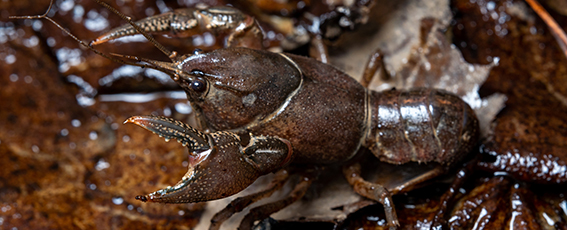
Perhaps road construction and species at risk can co-exist, but such an arrangement requires very careful planning. Read the full article…

Good woods

by  Jen Baker and Wendy Francis

Sustainable logging need not be an oxymoron. In a very progressive move, the Ministry of Natural Resources (MNR) is requiring that all forestry operations carried out on public lands become certified as sustainable by the end of 2007. Read the full article…

Climate watch

by Douglas Hunter

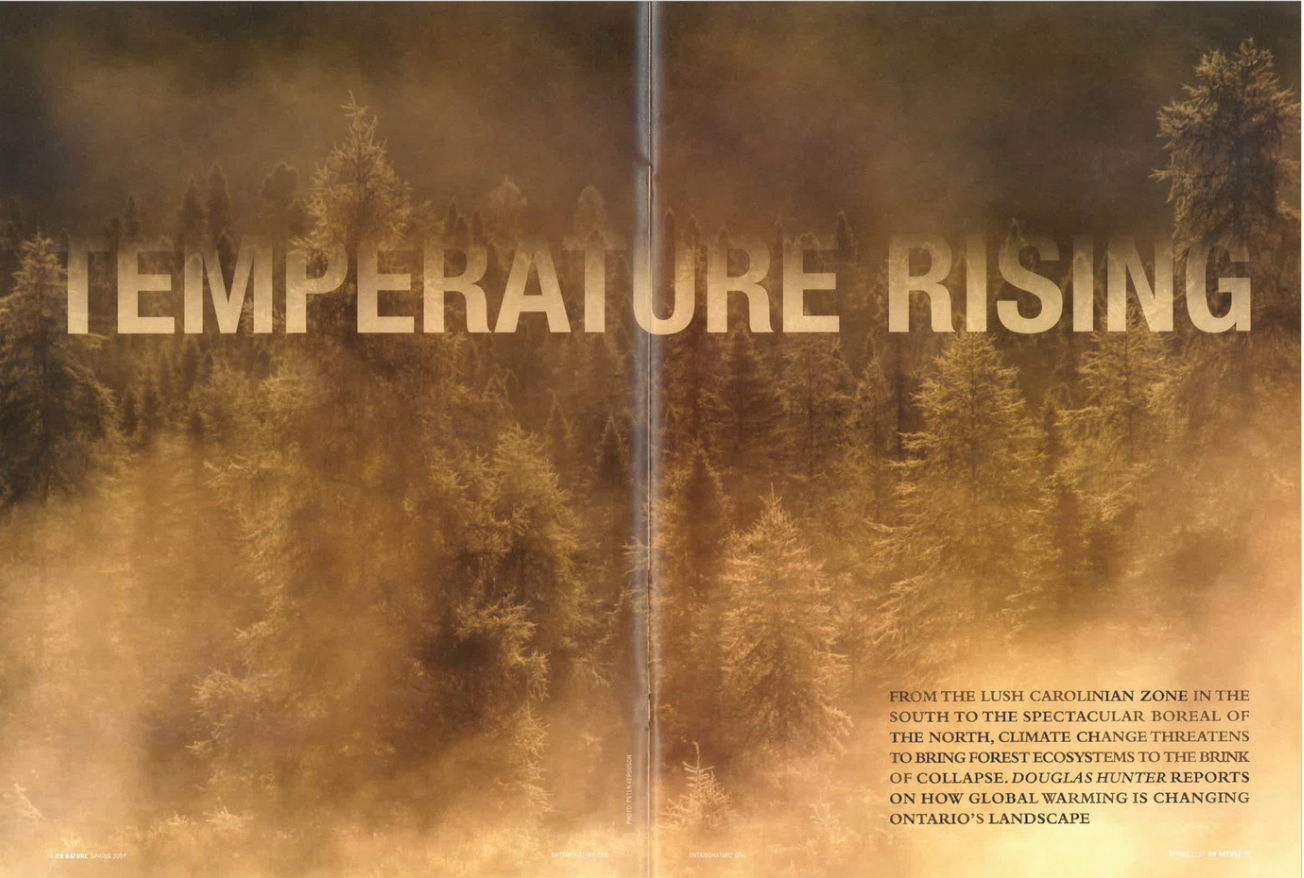
On March 13, 2007, a draft climate change bill was introduced in the British House of Commons that promised to make Britain the first country to set legally binding carbon reduction targets. The bill called for a 60 percent reduction by 2050, with specific targets to be determined every five years. Read the full article…

Land Trust grows bigger

by  Jim MacInnis

Through a generous donation and Ontario Nature’s initiative, the Oak Ridges Moraine Land Trust (ORMLT) has added another significant piece of land to its holdings. Senator Nancy Ruth, a dedicated environmentalist, donated some 25 hectares of forested land in north Pickering, which Ontario Nature brought to the land trust’s attention. The land is now designated as a Natural Linkage in the Oak Ridges Moraine Conservation Plan. Read the full article…

Reading feathers

by Sharon Oosthoek

As any female will tell you, it is important to know your potential mate’s strengths and weaknesses before committing to a relationship. Ornithologists have long thought female birds choose mates on the basis of their bright plumage – which, presumably, is a signal of a healthy male that could produce healthy offspring. A group of Ontario ornithologists, however, is casting doubt on this assumption. Read the full article…

Act right

by Wendy Francis

On March 20, Minister of Natural Resources David Ramsay introduced Bill 184, which contains a number of improvements to the Endangered Species Act (ESA). Ontario Nature, along with other members of the Save Ontario’s Species coalition, applauded the government for taking this step toward much needed protection for Ontario’s endangered plants and animals. Read the full article…

Tiny invader, big trouble

by Andrea Smith

Beneath the surface of many an Ontario lake lurks a tiny organism that is wreaking havoc on our aquatic ecosystems. The spiny water flea (Bythotrephes longimanus) is less than two centimetres long, with a barbed tail over half its length. Originally from Europe, the flea was introduced to the Great Lakes in ballast water in the early 198 0s. Since then it has spread to inland waters from Kingston to Thunder Bay. Read the full article…

A quiet spring in North Dike

by Shannon Wilmot

Birders visiting the Point Pelee area this summer may be disappointed, say local naturalists. Last June, trees and other vegetation at North Dike, which forms the north boundary of Point Pelee National Park, were destroyed in order to drain a clogged ditch. Read the full article…

Finding the right bag

Edward Keenan’s commentary and concerns about excess plastic bag usage is right on the mark [“Excess baggage,” Spring 2007, page 46]! I totally agree and have, in my own small way, been an advocate of the “no bag” or “cloth bag” approach to shopping for many years.

Like Keenan, I, too, get strange looks or the “Are you sure?” comment when I refuse to take a bag for whatever I’m purchasing. Particularly annoying to me, and the ultimate misuse of plastic bags, is milk – three bags in a bag and then, for sure, it will be carried home in another bag. Honestly! I have written to Neilson Dairy suggesting that the company redesign the outer milk bag to have an opening for a handle, thereby allowing the consumer to carry it as is, but they have not responded to this idea.

Do you have an opinion about plastic bags? Should a tax on bags be levied? Should they be banned from supermarkets and pharmacies? Visit our website and share your thoughts with us: www.ontarionature.org

I feel it is time to penalize those who choose not to use environmentally friendly bags. I recommend that, rather than the pathetic three cents that is charged by some stores to purchase bags, or the pathetic three cents that is refunded to shoppers who bring their own bags, the price tag for store bags go up to one dollar. If you are inconsiderate and don’t bring your own shopping bag, then to get a cloth bag (plastic would not be offered) would cost a dollar. Likewise, shoppers should be rewarded with a dollar for bringing their own bags. Upping the ante on the cost/benefit would help change consumer behaviour more quickly. All stores (not just major department or grocery stores) should be mandated to switch their plastic bags to bags made from corn or other vegetable-based content. Most stores and shoppers continue to use enormous volumes of plastic bags. The environmental effects are staggering. How about a campaign to end the production of plastic bags by 2010, and a mandate to reduce the use of plastic bags by 50 percent over the next two years?

There are bio-friendly bag alternatives available for household garbage and compost too, products that do not just break down into a million tiny plastic pieces, but actually decompose, leaving no harmful chemicals or residues.

One question: During the shift to biodegradable bags or cloth bags, what do we do with all the plastic bags that are already in circulation?
JOANNE C. BROWN, EAST YORK

More on bags

I really enjoyed reading the Spring issue of ON Nature – an excellent Canadian magazine!

I have to respond to the Last Word column by Edward Keenan with only one word: typical! Another supposedly environmentally smart person who can’t get it right! The problem is under Mr. Keenan’s sink!

The first of the four Rs is Refuse. How does a person who wants to ban useless items like shopping bags end up having so many in the cupboard?

I have not taken shopping bags for 25 years. When I take a small number of items to the cashier, the first thing I say is, “No bag thank you.” I have an eclectic collection of canvas, cotton mesh, and nylon mesh produce and shopping bags, which I have used for years at grocery stores.

I quite enjoy going to stores that give us a pathetic rebate for using our own bags – a whole three cents, compared to the 10 cents each shopping bag costs the store. I’m doing my part though, and it also helps us to achieve our goal of only one small can of garbage every 10 plus weeks. Note that we also don’t buy garbage bags – another bright idea!

I agree with Mr. Keenan about banning the bag. There really is no need for them. Put your money where your keyboard is and do something about it. Set an example and act on it. Then tell others about it!
BRAD ABERNETHY, KING

Speaking of bags

I read with interest the Last Word article in the Spring 2007 issue on the subject of the plastic bag. I have been using cloth bags for my grocery shopping for a couple of years. I started using cloth bags because I was accumulating so many plastic bags from grocery shopping (for just myself alone) that I didn’t know what to do with them.

What I would like to know is why milk and dairy products in general have so much plastic packaging. Also, why does milk in cardboard cost so much more than milk in plastic bags? How can we eliminate plastic packaging for meat, bread and bakery products? I love your magazine and look forward to every issue.
ANGELA CHANG-ALLOY, BRAMPTON

Leave Trees Alone

I was appalled to read in the latest issue of ON Nature a pro-GMO article concerning poplar trees [“Poplar improvements,” Spring 2007, page 10].

There is little doubt that the viewpoint of the article is strongly in favour of foisting this extremely dangerous technology upon our northern forests. Not surprisingly, the driving force behind this concept is the powerful Ontario forestry industry and lobby. What is surprising, however – indeed astonishing – is to see such an article featured in the printed voice of the organization that supposedly has the interests of Ontario’s natural world at heart!

The article is full of thinly veiled justifications for GMO trees, and uses false appeals to preservation of the environment and trees to try to win us over to this viewpoint.

There is a very good chance that in the coming years we will be desperately fighting not only the spread of invasive alien organisms, but GMOs as well. They certainly have the potential to become every bit as disruptive – probably more so.
WALTER MUMA, CAMBRIDGE

Food for thought

The article that Bill Caulfeild-Browne quotes from The Economist gives a misleading view of organic farming and neglects some important issues about conventional farming [In the Mail, Spring 2007, page 7]. Some aspects of the “green revolution” have been adopted by organic farmers, such as improved yielding varieties and a greater understanding of soil chemistry and plant requirements. Making a comparison with farming practices 50 years ago misses the point. In fact, (this is quoted from the website of the Institute of Science in Society www.i-sis.org.uk/OBCA.php): “Researchers led by David Pimenthal, ecologist and agricultural scientist at Cornell University, New York, have now reviewed data from long-term field investigations and confirmed that organic yields are no different from conventional under normal growing conditions, but that they are far ahead during drought years.”

The reasons are well known: organic soils have greater capacity to retain water, as well as nutrients such as nitrogen. Organic soils are also more efficient carbon sinks and organic management saves on fossil fuel, both of which are important for mitigating global warming.

It should also be noted that if the massive direct and indirect subsidies were eliminated from conventional farming, there would be much less price differential between organic and conventional products.

Something that wasn’t mentioned in the article is the damage that conventional farming has been causing the environment, especially since the onset of the green revolution. Intensive irrigation and fertilization practices in arid areas (such as the Imperial Valley in California, the Murray/Darling River Basin in Australia and the Aral Sea vicinity in the former Soviet Union) have caused a buildup of salts in the soil that has started taking vast amounts of land out of production. Also, the rapid increase in irrigated farming has dramatically depleted underground reservoirs in vast areas that rely on them for their primary source of water. It has been projected that, due to irrigation and global warming, a significant number of resevoirs will dry out in the next 10 to 20 years. Many of the practices of the green revolution are not sustainable and, by having encouraged farmers to settle in marginal areas, the end result may prove catastrophic.

As for the elitism of the organic movement, I don’t think the lobbyists from Monsanto or DuPont or the Dow Chemical Company have experienced the physical sensation of hunger any more than the environmental lobbyists.

The sad truth is that most of the citizens of the developing world are not in a position to defend their interests. Others with greater means must do so on their behalf, just as others must do on behalf of the environment. I think Mr. Caulfeild-Browne would agree with me that there need not be a conflict between those concerned with social justice and those concerned with the environment. Surely everyone is needed who has the ability to stand up to those who promote their own interests over the long-term health of the planet or its citizens.

I invite Mr. Caulfeild-Browne to think of what our existing forest and wetlands could have been like had there been no polluting fertilizer runoff or decimation of bird and insect populations through pesticides.
BOB KENNEDY, TREASURER , CANADIAN ORGANIC GROWERS – GTA CHAPTER

What you told us

by Victoria Foote

Boy, did we hear from you! ON Nature’s Last Word column in the Spring issue (“Excess baggage,” page 46) by Edward Keenan clearly struck a collective nerve, as you will notice in our In the Mail section. Quite a few readers voiced their enthusiastic support for Keenan’s suggestion that something – perhaps a tax on usage, maybe an outright ban – be done to reduce our dependence on plastic bags. (The Worldwatch Institute estimates that 100 billion plastic bags are discarded each year in the United States alone. More than 500 billion are used annually around the world.) Not long after the publication of the Spring issue, Loblaws, to its credit, announced its new President’s Choice (PC) green shopping bag. The PC bag is recyclable and 85 percent of the fabric comes from post-consumer recycled plastic soft drink and water bottles.

One writer, Joanne Brown, even sent her letter to Toronto’s mayor David Miller, pointing out to him that San Francisco’s Board of Supervisors recently passed legislation banning plastic bags in its major supermarkets and, within a year, large chain pharmacies. Stores will probably switch to biodegradable bags made of corn and potato starch.

We strongly believe that concrete action is needed in these key areas:
• Conservation of the boreal forest
• A clean, green provincial electricity plan
• Safeguarding the Greenbelt and strengthening policies to stop urban sprawl and protect green space across southern Ontario
• Adoption of a Pollution and Cancer Prevention Act
• Establishment of a Great Lakes Protection Plan and full implementation of the recommendations of the Walkerton Inquiry
• A comprehensive provincial waste-reduction strategy

We agree that something needs to be done to curb the ubiquitous presence of plastic bags, and we are hoping that local politicians are listening. We are also thinking about the upcoming provincial election. Along with other environmental organizations, Ontario Nature has put forward six election priorities that form the backbone of any meaningful environmental agenda in this province.

These are critical issues for which our provincial government must be accountable and that reflect our environmental concern for healthy habitats and healthy inhabitants.

ON Nature continues to do its part to minimize its ecological footprint. The magazine is still printed using vegetable-based inks on chlorine and acid-free FSC (Forest Stewardship Council) certified paper containing 50 percent recycled fibre and 25 percent post-consumer fibre – the most environmentally friendly paper stock available in the weight used by this magazine.

But magazines should also be printed on eco-friendly presses. Warren’s Waterless Printing used a waterless press to print this issue, which eliminates the use of dampening solutions and petroleum-based solvents. Warren’s is FSC certified and purchases green, renewable energy to power its printing facilities.

ON Nature is also proud to announce that “The saga of Victor mine” (Spring 2006), by Chris Nuttall-Smith, and “The new farm” (Autumn 2006), by Ray Ford, have been nominated for National Magazine Awards (environment category). The winners will be announced June 15, 2007.

Contributors

jen_bakerJen Baker, Ontario Nature’s boreal campaign coordinator, has long been an advocate for the boreal forest. Unfortunately, threats to the forest have multiplied over time. As Baker writes in this issue’s Last Word column (“Escape clause”), a legislative loophole allows mining companies to stake claims and initiate mining operations on ecologically significant habitat without a thorough environmental assessment being done first. “It is important,” says Baker, “that people understand the freedom big industry has on our public lands and why it is so vital that we put conservation before development in the boreal forest.”

allan_britnellToronto-based writer Allan Britnell is a frequent contributor to ON Nature. For his profile of aerial photographer Lou Wise (“The view from up here”), Britnell combed through Wise’s extensive collection of photographs of southern Ontario waterways. Britnell quickly discovered that Wise’s archives provide a unique view of how much our urban and rural landscapes have changed over the past three decades. “I’ve always loved aerial photographs,” says Britnell, “and talking to Lou is like getting a living history lesson.” Britnell’s articles have appeared in Cottage Life, Canadian Geographic and Toro.

Fall 2007

TOC1_Fall07

Departments
This Issue: Sneak preview
The state of Ontario’s birds by Victoria Foote
In the Mail: Good forestry
Earthwatch
Spectacular coastline to be protected; driving through the forest; peregrine falcons face new threat
Profile: A perfect match
Environmental crusader Kaid Benfield marries green buildings to smart design and an eco-friendly community is born by John Lorinc
Field trip: Spiders
Nature’s web masters by Dan Schneider and Peter Pautler
Inside Ontario Nature
Ontario Nature awards green heroes; Vic Orr named environmentalist of the year
Last Word: Local matters
Conservation efforts at home really do help save the world by Caroline Schultz
Features
Cover Story: The birder's bible
The results from Ontario’s second breeding bird atlas are in, revealing a number of unexpected population trends and offering a glimpse into the precarious world of birds by Peter Christie
The great fall migration
Special pullout section: Where and when you can watch our avian travellers head south by Tim Tiner
The magic of mushrooms
Neither plant nor animal, these strange organisms are in a kingdom all their own by Cecily Ross
The beachcombers
Every year, thousands of hardy souls from all walks of life participate in the Great Canadian Shoreline Cleanup by Janice Weaver
What will the environment be like in 2050?
Winners of Ontario Nature’s Second Annual Youth Writing Contest provide an answer

Saving a spectacular shoreline

by Conor Mihell

A seven-year land-use debate now near conclusion in northern Ontario could result in the world’s longest stretch of protected freshwater coastline. Negotiations between the Partnership for Public Lands (of which Ontario Nature is a member), Ministry of Northern Development and Mines (MNDM) and Ministry of Natural Resources (MNR) to finalize the Lake Superior Highlands Conservation Reserve – intended to protect part of the Lake Superior coastline – were kick-started by a proposal last fall to expand territory belonging to the Michipicoten First Nation, near Wawa, Ontario. Read the full article…

Good forestry

Douglas Hunter’s fascinating piece “Temperature Rising” [Spring 2007] contained a sidebar that made my temperature rise. The sidebar promotes the erroneous idea that uncontrolled, rapacious logging operations in the boreal forest must be stopped because they are “a cause of global warming.” Included in the sidebar is the statement, “At the same time that greenhouse gas emissions are increasing, forests – which absorb carbon dioxide from the atmosphere and are our best defence against global warming – are being cut down.” In a subsequent comment attributed to ForestEthics about the rate of harvesting, most readers will be left with the impression that climate change can be stopped if logging is stopped, and that forestry is a significant “cause of global warming.”

A glance at relevant publications produced by reputable organizations will confirm that the contribution of sustainable forest management and the forest products industry is much more beneficial than detrimental.

The website of the Ontario Ministry of Natural Resource (MNR) confirms that the harvest of wood on Crown land is highly regulated, and that MNR and the forest industry are working very hard to practise holistic “sustainable forest management” in the process of harvesting that wood and regenerating the forests from which it comes.
Kandyd Szuba, Domtar Inc.,
Nairn Centre

Flying squirrels

In the article “Land before time” [Summer 2007], it is stated that “the northern flying squirrel, a creature typical of northern boreal forests, reach their southern limits in the [Frontenac] arch.”

This statement, as I read it, is not correct. The northern flying squirrel is found farther south than the Frontenac Arch. In Ontario, the northern flying squirrel can be found in the Rouge Valley and at Hilton Falls near Milton, and many geographic locations north of these areas, which are located south of the Frontenac Arch.

Moreover, the southern flying squirrel was removed from the COSEWIC list in April 2006. Why? Range expansion likely due to climate change (warming).

It is indeed unusual for a mammal to be removed from such a list, and we should celebrate this action, at first glance. However, in the case of the southern flying squirrel, we suspect climate change has allowed [the species] to survive winters in parts of Ontario that would previously have been too inhospitable. In 2003, I was trapping on Crown land for northern flying squirrels (as part of an Ontario Ministry of Natural Resources [MNR] landscape ecology initiative) just outside of Killbear Provincial Park, and I caught only southern flying squirrels. This was, at the time, the farthest north they had ever been recorded. Later that year, Jeff Bowman of MNR found them a hundred or so kilometres north of Killbear. The next year, none were found, as the winter was severely cold and a high dieoff was experienced. Two steps forward, one step back.

So why should we not celebrate the southern flying squirrel’s sudden range expansion? The general southern flying squirrel population carries a relatively harmless (to it) parasitic nematode that lives in the gut as a non-lethal entity, but in areas where the northern and southern species of flying squirrel are sympatric, the nematode can be passed to the northern species. The nematode is always fatal to the northern flying squirrel.

This could, down the road, present serious problems for southern and central Ontario’s native northern flying squirrel population.
Steve Patterson,
Streetsville

Correction: In the article “The lessons of the Spanish” (Summer 2007), the Spanish River Waterway Provincial Park is described as 400 kilometres wide. Wishful thinking on our part perhaps. The park is only 400 metres wide.

Sneak preview

by Victoria Foote

This issue of ON Nature contains a unique story: a first look at the results of five intense years of data collection to produce the second Atlas of the Breeding Birds of Ontario, to be published in late 2007. Twenty years ago, Ontario Nature was one of only two sponsors for the initial atlas – the other was Long Point Bird Observatory. This atlas was an enormously ambitious undertaking and the first of its kind in Ontario. Data was collected from 1981 to 1985 and compiled into a single, massive book that revealed bird distributions throughout the province.

The second atlas was possibly even more ambitious in scope – this time Ontario Nature was one of five sponsors. Thousands of volunteer “twitchers” fanned out across Ontario in search of birds that were breeding and raising young. The staggering amount of information produced was meticulously compiled and analyzed, not only yielding a comprehensive picture of current bird distributions, but also indicating changes in those distributions, along with population trends that reveal increases and decreases for species.

Such revelations are another first. With the gathering of data in preparation for the second atlas, comparisons between surveys could now be made and conclusions drawn. Some species are doing well; others are not. Grassland species – bobolinks, eastern meadowlarks – are in decline as are insect-eating birds (aerial foragers) such as swallows and martins, possibly as a result of habitat loss and increased pesticide use. On the other hand, raptors such as hawks, eagles and owls have increased. So have thrushes and many migratory warblers.

Population trends in bird species also tell us something about the habitats that birds prefer. Of all the regions in the province, the Carolinian zone in southern Ontario appears to be the most degraded. Atlas results show decreases for numerous neotropical migratory species and waterbirds that breed in this region, one species (the common moorhen) by as much as 38 percent.

The breeding bird atlas is not just an invaluable resource for dedicated birders. It is of value to anyone concerned with our bird life and the integrity of the ecosystems it depends on.

Contributors

ian_brownToronto-based photographer Ian Brown, whose pictures appear in “The magic of mushrooms”, hiked through a Simcoe County forest last September, snapping shots of mushrooms and guide Bob Bowles. Like many who go for a walk in the woods with Bowles, Brown got more than he bargained for. “He’s like an onion,” says Brown of Bowles. “He is so unassuming but when you peel back the layers you find this adventurous and worldly person. And he’s a perfect tour guide because his enthusiasm is infectious.” Having no previous mushroom hunting experience, Brown says he was most impressed by the vibrancy created in an overcast woodland in fall. Brown’s photographs have also appeared in Cottage Life and Saturday Night. He is currently working on a book of portraits titled American Dreams, which will be published in September 2008.

peter_christiePeter Christie, a science writer and frequent contributor to ON Nature, worked as a summer student for the first Atlas of the Breeding Birds of Ontario in the early 1980s. For his feature, “The birder’s bible”, Christie revisited the world of birding and pored over new data that will appear in the soon to be published atlas. “The initial atlas picture of where birds live in Ontario was thrilling to see,” says Christie, “but the second atlas goes one step further: it shows these birds in a remarkable state of change – it has brought that first static picture to life.” Christie is the author of two animal behaviour books for children, Well-Schooled Fish and Feathered Bandits and Naturally Wild Musicians. His book about past climate change and human history will be published this spring by Annick Press.

Climate Watch

by Douglas Hunter

In the summer of 2007, U.S. farmers were expected to plant the largest corn crop since 1944 to cash in on the boom in ethanol as an alternative fuel for use in combatting global warming. Meanwhile, an unpublished report by Environment Canada scientists found no statistical difference between tailpipe emissions of vehicles burning regular unleaded gasoline and fuel blended with 10 percent ethanol, and the government of Uganda backed down from turning over about one-third of the Mabira Forest Reserve, some 7,000 hectares in all, to an Asian sugar-cane company. Read the full article…

A forest divided

by Douglas Hunter

The ability of hikers to coexist peacefully with dirt bikers and ATV drivers is being put to the test in the largest municipal forest in Ontario, as Simcoe County introduces a new policy aimed at ending unapproved and environmentally harmful use of off-road vehicles by giving their drivers approved places to play. Read the full article…

U.S. to trap our falcons

by D’Arcy Jenish

North America’s peregrine falcons – specifically Falco peregrinus anatum, the most populous of the continent’s three peregrine subspecies – were in danger of disappearing in the mid to late 1970s. The culprit was DDT, which the magnificent raptors ingested through their prey. DDT blocked the transfer of calcium from the female to her eggs, and during incubation, females would inadvertently crush their thin-shelled, weak eggs. Read the full article…

A good act

by Wendy Francis

In May of this year, Ontario became the leading jurisdiction in North America when it comes to protecting the most vulnerable plants and animals. In partnership with other conservation organizations, Ontario Nature engaged in a vigorous campaign to revamp the Endangered Species Act (ESA). The improved act is founded on science, not politics, and comes with a range of programs and resources to ensure that endangered species have a fighting chance of survival. Read the full article…

Local matters

Conservation efforts at home really do help save the world

by Caroline Schultz

With every passing year, the environmental maxim “Think globally, act locally” takes on added meaning. This phrase has empowered us to take action on many environmental issues, such as banning toxic chemicals like PCBs and DDT, knowing that community efforts can yield global benefits.

But I wonder how many Ontarians consider the global implications of our actions when it comes to conserving native habitats and species. For the most part, we protect local woodlands and wetlands because they are part of our neighbourhood and because, as naturalists, we know it is the right thing to do.

But in Ontario, some of these seemingly parochial actions are, in fact, a significant contribution to global biodiversity conservation, and every bit as important as the conservation of the Amazonian rain forest or the protection of African savannahs. Perhaps our exposure to images of exotic wildlife and the astounding species diversity in other parts of the world has led us to believe we are a global biodiversity bit player. While Ontario does not house the extraordinary species diversity found in the tropics, this should not trivialize the importance of Ontario’s ecosystems and native biodiversity. It is essential that we learn about, appreciate and, most importantly, help protect the world’s most significant and threatened species and habitats – some of which are right here.

At 1,076,395 square kilometres, our province is huge. Ontario is larger than France and Spain combined and contains a wide array of climatic and vegetation zones, from temperate deciduous forest in the south to the tundra in the north. Ontario’s some 250,000 lakes contain an astonishing one-third of the world’s fresh water. Concentrated as the population is in the southernmost part of our province, even seasoned naturalists can be forgiven for sometimes forgetting that Ontario is home to “exotic” wildlife such as polar bears, wolverines, belugas and walruses. In fact, the southern Hudson Bay polar bear population, which we share with Quebec, numbers about 1,000 individuals. At 7 percent of the Canadian total, this is a globally significant population.

Ontario provides critical habitat for not only polar bears, but also many species that are of conservation concern internationally. Ontario species that the IUCN (the World Conservation Union) has identified as globally threatened include elusive creatures like the red wolf and wolverine, as well as more familiar species such as the spotted turtle, northern bobwhite, olive-sided flycatcher, cerulean warbler and red-headed woodpecker. Conservation biologists have identified a number of Ontario breeding bird species, in addition to IUCN-listed species, that are of international conservation concern. Among them is the bay-breasted warbler, identified because of long-term, persistent declines in its population.

Seventy globally significant Important Bird Areas have been identified in Ontario. These sites, identified according to internationally established criteria, provide critical habitat for 1 percent or more of the global population of one or more bird species or species groups. This means that we have an international responsibility to protect these sites and ensure the long-term security of the species they support. Some of these sites are known to support a very large proportion of a species’ global population. For example, the Albany River Estuary on Ontario’s James Bay coast supports more than 20 percent of the world’s Hudsonian godwits on their southern migration to Tierra del Fuego, the southernmost tip of South America.

Ontario also encompasses the heart of Canada’s boreal forest, which, along with the Amazon and the Russian taiga, is one of the world’s three remaining frontier forests and home to billions of breeding songbirds. Ontarians are stewards to tall-grass prairie and black oak savannah, two of the world’s most endangered ecosystems. Less than 1 percent of North America’s original pre-settlement old-growth eastern white pine is left today and almost two-thirds of that is in Ontario.

We have substantial global responsibilities to protect and steward our native wildlife and habitats. We must continue to protect what is familiar and immediately around us, but we must also keep in mind the contribution we can make to conserving the diversity of life on earth.

Caroline Schultz

Caroline Schultz is the executive director of Ontario Nature.

Get with the program

Ontario Nature’s Volunteer for Nature (VfN) program was especially successful this summer. Among other activities, VfN participants assisted in two herptile surveys, the first at the Altberg Wildlife Sanctuary Nature Reserve near Norland, where Joe Cebek, a biologist with Trent University, taught the group how to identify various species and about the life cycles and habitat requirements of each.

A similar inventory was conducted at the Kinghurst Forest Nature Reserve in Grey County where participants and Ontario Nature staff identified 13 herptile species, including the uncommon ribbon snake, listed as a species of special concern in Canada. Ross McCulloch, assistant curator of herpetology at the Royal Ontario Museum, led the survey.

Amphibians are especially sensitive to changes in their environment and are among the first species to suffer the consequences of environmental threats such as pollution, destruction of wetlands and increased ultraviolet radiation. Many amphibian species around the world are declining in population. By monitoring populations on our reserves, Ontario Nature is gathering information that ultimately may help stop the decline of these important species.

Ontario Nature greatly appreciates the assistance the Kawartha Field Naturalists, the Saugeen Field Naturalists and the expert herpetologists provided. To learn more about the VfN program and Ontario Nature’s current campaigns, visit our website at www.ontarionature.org.

Ontario Nature’s AGM

In June, the Peterborough Field Naturalists hosted Ontario Nature’s 76th annual general meeting and conference at Trent University.

Nearly 200 members and supporters attended the conference, the theme of which was Landscapes of Transition, a title that symbolizes both Kawartha’s physical location between the Canadian Shield and the Great Lakes-St. Lawrence Lowlands area and the changes occurring in our natural environment.

Minister of Natural Resources David Ramsay was a keynote speaker on the first day of the conference, which included numerous workshops and discussions. Ontario Nature also presented its annual conservation awards to this year’s green heroes: Robert L. Bowles; Dr. Nicholas G. Escott; Terry Carr; and the Windsor Regional Hospital.

The late Harold Lancaster

Harold Leslie Lancaster, former director of Ontario Nature when it was called the Federation of Ontario Naturalists, and founding member of the West Elgin Nature Club, passed away on April 1, 2007 at the age of 85. An avid birder, Harold compiled an extensive birding record that spanned 75 years, a copy of which will be forwarded to the Royal Ontario Museum for their official records. His work in the field was the driving force behind the publication of The Birds of Elgin County in the 1950s. Harold is survived by his wife, Evelyn, two daughters, four grandchildren and two great-grandchildren.

Environmentalist of the Year

On April 24, the City of Kawartha Lakes recognized Ontario Nature member Vic Orr as “Environmental Hero of the Year.” Mayor Ric McGee presented the award on behalf of the city council, in recognition of Orr’s role in the preservation of natural habitats, in particular, the leadership role that Orr has played in the preservation of the Altberg Wildlife Sanctuary Nature Reserve. Orr was instrumental in the stewardship and expansion of the reserve, which, at 471 hectares, is Ontario Nature’s largest reserve. Orr is past president of the Kawartha Field Naturalists and current chair of the Altberg Reserve Subcommittee. He is a knowledgeable naturalist and keen bird watcher who participated in the Ontario Breeding Bird Atlas study.

Nature Network News: News from Ontario Nature’s member organizations

10th Annual Huron Fringe Birding Festival

This spring, nearly 300 enthusiastic birders and other naturalists attended the 10th annual Huron Fringe Birding Festival. During the 10-day festival, held mostly at McGregor Point Provincial Park along Lake Huron, an impressive 166 bird species were observed.

Events did not focus exclusively on birds, however. Participants also enjoyed learning how to identify wildflowers, butterflies, trees and insects, and attended workshops on photography, bird identification and naturalized gardens.

Information about the 2008 Huron Fringe Birding Festival will be available early next year at the Friends of MacGregor Point Park website, www.friendsofmacgregor.org.

Owen Sound Field Naturalists Update

The Owen Sound Field Naturalists (OSFN) has undertaken many conservation projects over the years – from making trails to constructing an avian viewing tower to building nesting platforms for ospreys and nesting apartments for purple martins. OSFN is now developing a program to ensure that these projects are regularly maintained. From among its members, the club has identified a steward for each project, usually someone who lives near it. Each steward is asked to visit the site at least once a year and report back to the club on the state of the project and whether it needs maintenance.

At the OSFN/Saugeen Field Naturalists boardwalk through the Oliphant Fen, for example, the steward reported that ATVs were gaining access to the fen, leaving big ruts and damaging vegetation. The same steward then wrote to the municipality of South Bruce Peninsula, asking whether, during planned road improvements in the area, the municipality would consider placing some boulders along the edge of the fen to keep ATVs out. OSFN members hope that their ongoing efforts to maintain the work they have done will allow projects and habitats to provide the maximum benefit to both people and wildlife.

Spiders

by Dan Scneider and Peter Pautler

WEB MASTERS

Spiders are master weavers and use their silk – which has greater tensile strength than steel and twice the elasticity of nylon – for various purposes: to immobilize prey, to craft egg cases, safety lines and shelters, as dispersal parachutes and for sexual communication.

But the silken construction we are most familiar with is the orb web. To create it, an orb weaver lets a sticky silk strand drift on the breeze and then reinforces the strand once it adheres to something. Next, the spider drops from the middle of this first line to form a “Y,” the first of many supporting spokes. After completing the non-sticky frame and spokes, the web master produces silk on which tiny glue droplets sit and weaves a sticky spiral. From start to finish a web, which can contain up to 20 metres of silk and 1,000 to 1,500 connections, may be created in a mere 30 minutes. A spider can weigh more than 1,000 times the weight of the web in which it lives. Orb weavers will eat and remake webs every few days – or sometimes daily – recycling 90 percent of the silk used for the original web.

When summer slips into fall, the insect population balloons to astronomic proportions – a feast for birds and bats, as well as for an insect’s primary predator: spiders.

Evolution has equipped spiders with myriad techniques for capturing prey: jumping spiders leap, crab spiders ambush, wolf spiders give chase, webs entrap. The earliest spider fossils date back 300 million years, and the creatures probably developed at least 100 million years before that, during the Devonian period. No other group of animals has been hunting insects so efficiently for so long.

Most spiders use venom, delivered from an opening in their chelicerae (jaws), to subdue and predigest prey. In Ontario, only the rare northern widow spider is considered dangerous to people.

Both insects and spiders are arthropods (invertebrates with jointed legs). Insects form one class of arthropods, while spiders are an order – a level that is subordinate to a class – of arachnids. Other arachnids include harvestmen (daddy-long-legs), scorpions, ticks and mites. Spiders differ from insects in having eight rather than six legs, simple rather than compound eyes, two main body parts (one of which is the cephalothorax – a fused head and thorax) instead of three, no antennae and, of course, no wings.

The last warm days of autumn are ideal for examining spiders. Early morning dew or frost reveals webs that are nearly invisible at other times. Some adult spiders do not live past the fall season, while others overwinter under bark, in leaf litter or in other shelters.

Spiders as a whole can be a daunting group to identify, but learning how to discern certain family characteristics will make the task much easier.

CRAB SPIDERS
FAMILY
Thomisidae

Like their namesake, crab spiders extend their legs to the sides. The second pair of legs is longer than the other pairs, and each leg has two claws at the end. Crab spiders climb in and around plants in search of prey, which they ambush.

Flower, or goldenrod, spiders (Misumena vatia) are yellow or white with red streaks on each side of the abdomen. Females measure five to 10 millimetres, and males are even smaller, at three to four millimetres in length. Capable of changing colour from white to yellow to match the flower on which it sits, the flower spider waits motionless to ambush nectar-seeking insects.

JOIN THE WEB

Join Spider WebWatch (www.spiderwebwatch.org), a biodiversity monitoring project, and report the presence and location of indicator species. Doing so provides important information about the distribution, habitat and population changes of spiders.

COBWEB WEAVERS OR COMB-FOOTED SPIDERS
FAMILY
Theridiidae

House, or domestic, spiders are typical cobweb weavers, possessing a large, globular abdomen and very long legs. The spider uses a comb of curved bristles (setae) on the fourth pair of legs from the front to throw silk strands over insect prey that has become entangled in the messy webs. Once the prey is so cloaked, the house spider injects poison into its victim, drags it further into the web and sucks the juices from the now lifeless prey.

The northern black widow (Latrodectus variolus) is one of the largest cobweb weavers. Females are 12 to 16 millimetres in length – significantly larger than males, at 10 to 12 millimetres, although the males possess longer legs and narrower abdomens.

Northern black widows spin messy webs on stumps or logs, under stones, in holes and occasionally in barns and rural privies. After mating, the female often devours the male. Northern black widows do bite people. Although the bite is painful and may cause laboured breathing and severe abdominal pains, it is rarely fatal.

WOLF SPIDERS
FAMILY
Lycosidae

The large, grey wolf spider is a nocturnal hunter. Its cephalothorax and abdomen are as long as they are wide, and its long, hairy legs have protruding spines. With eight eyes of unequal sizes arranged in three rows on the front of the cephalothorax, wolf spiders have excellent vision, as well as a keen sense of touch. These spiders are ground dwellers that chase their prey rather than use web snares or traps. The thin-legged wolf spider (Pardosa xerampelina) is a swift runner that can chase prey over great distances.

LONG-JAWED ORB WEAVERS
FAMILY
Tetragnathidae

Tetragnathids are long, slender spiders with prominent chelicerae (jaws) that are two-thirds the length of – or longer than – the cephalothorax. These spiders hide in grass, extending their long first, second and fourth pairs of legs lengthwise while clinging to blades of grass with their much shorter third pair of legs. Their webs are small orbs with few radiating supports and are often suspended at an angle between branches of shrubs.

The long-jawed spider (Tetragnatha laboriosa) is pale yellow and silver with dark grey below on the abdomen. Because of its poor vision, this spider keeps to one side of its web with one leg touching a supporting line to sense the vibrations of a trapped insect. If disturbed, the spider will drop to the ground out of sight.

To learn more

BOOKS

Spiders and Their Kin, Herbert W. Levi & Lorna R. Levi, St. Martin’s Press, New York (1981)

WEBSITES/ORGANIZATIONS

Ojibway Nature Centre: Spiders at Ojibway (www.ojibway.ca/spiders.htm)

NURSERY WEB WEAVERS
FAMILY
Pisauridae

With its long legs and large grey brown body, the nursery web spider resembles a wolf spider in appearance but not in behaviour. The nursery web weaver, which is known to have good vision, will run after prey over land, skate across water surfaces chasing aquatic insects and dive underwater in pursuit of a meal.

The huge, brownish grey fishing spider (Dolomedes tenebrosus) is a formidable hunter. With a leg span of more than 80 millimetres and a body length of up to 26 millimetres, this fishing spider ranges far and wide across the forest floor, along streams and ponds and on the water’s surface in pursuit of aquatic insects. It has even been known to dine on small tadpoles and fish.

ORB WEAVERS
FAMILY
Araneidae

Orb weavers number more than 2,500 species worldwide, and several hundred species in North America. Nearly all produce a spiraling orb web with strong support lines that make for a highly effective insect snare. Orb weavers rotate trapped insects with their forelegs while their hind legs pull out silk from the spinnerets to wrap the victim. Despite possessing eight eyes – arranged in two rows of four – an orb weaver’s vision is poor, rendering it dependent on sensing vibrations from its web.

The striking black and yellow argiope (Argiope aurantia) is one of the largest orb weavers. Silver hairs adorn the upper half of the cephalothorax, and yellow and orange markings contrast with the black, egg-shaped abdomen. Females, ranging in length from 19 to 28 millimetres, are three times the size of males, at fi ve to nine milliimetres. Their webs are large orbs with extra zigzags of silk (called a stabilimentum) woven across the middle.

JUMPING SPIDERS
FAMILY
Salticidae

As its name suggests, the jumping spider pounces on its prey. These small-to medium-sized spiders have sharp, binocular vision, the result of two disproportionately large eyes located at the front of the cephalothorax. The jumping spider stalks its prey and then makes a leap, setting down a dragline of silk in case it misses. Rather than build webs, jumping spiders weave silken retreats in which they moult, rest and hibernate.

A common species, the three-spotted jumping spider (Phidippus audax) is found throughout southern Ontario woods on tree trunks and fallen logs, in ground litter and under stones. Males are approximately 13 millimetres in length, and the bigger females grow to 15 millimetres.

FUNNEL-WEB WEAVERS
FAMILY
Agelenidae

This family of spiders typically constructs a funnel-shaped web close to the ground. Also known as grass spiders, agelenids conceal themselves in the narrow end of the funnel and wait for insects to stumble into it. When the spider senses a vibration, it charges out and subdues its victim with a paralyzing bite.

The barn funnel weaver (Tegenaria domestica) has long, thin legs with spine-like hairs. During the breeding season, male and female weavers share the same web, often constructed in barns, cellars and dark corners.

Dan Schneider and Peter Pautler are resource interpreters with the Grand River Conservation Authority.

Ontario Nature’s second annual Youth Writing Contest

Second_annual_writing_contest

Today’s adolescents are a well-informed group. Quite often, they are disarmingly knowledgeable about pressing environmental topics: climate change, air pollution, endangered species. No doubt they wonder what kind of world they will inherit when they are their parents’ age.

The Top 5

1st Weeping Wetlands
By Jenna of Whitby

2nd Just Change
By L. Jarvis of London

3rd The World in 2050
By Dylan of London

4th A Day in the Life of a Polar Bear: 2050
By Samantha of Oshawa

5th The Environment in 2050
By Farhana of London

So, for Ontario Nature’s second annual youth writing challenge, we asked kids in grades 7 and 8, “What will the environment be like in 2050?” Members of the selection committee – Gary Clement, winner of a Governor General’s Award for his children’s book The Great Poochini; Stephanie Foster, director of the Centre for Environment and Sustainability at Upper Canada College and an Ontario Nature board member; and Caroline Schultz, Ontario Nature’s executive director – can attest that choosing the winning essays from the more than 100 submitted was not easy. Published here are the top three, which the judges found to be insightful and thought-provoking.

The writers of the winning essays received their awards at Ontario Nature’s annual general meeting in June. Waste Management, Inc. sponsored the contest.

Weeping Wetlands

by Jenna

Sitting on a bench, looking into a little creek; a small trout swam by. Ducks were quacking and splashing their wings in the water. A butterfly landed on a leaf, moving its wings up and down slowly. The sun danced through the window onto this imitation of a wetland. People began to come in, flooding the pavilion at the zoo to see what they could have seen 50 years ago. The Canadian wetlands were close to gone because they were seen as a waste of land. Wetlands were so full of life like fish, birds, amphibians and small mammals. The marshes used to have tall and majestic whooping cranes. But the government flooded and poisoned their land to get rid of mosquitoes. Large marshes were bulldozed to build small cities that grow into big cities that take out other wetlands and forests. As always, man doesn’t know what he has until it is gone.

A little girl stopped to watch the ducks playing in the water. She watched them as though she were seeing them for the first time. The swamp where I used to see the ducks swim, filtered the water we drink, was removed for a mall. There used to be a small creek by the school where that girl goes; it absorbed rain and melting snow, and reduced flooding like it was a sponge. Then it was cut off for a playground.

I got up and walked with the crowd into the next room. An indoor pond full of salmon was next on display. I started thinking about when I was a little girl and I’d see them migrating through creeks. “Over 95 percent of southern Ontario’s wetlands are gone. Please enjoy our display of what they would have looked like,” read the plaque near the exhibit. I started asking myself some questions: If I had said something about the bulldozing of Mallard’s Marsh, would the species of mallard ducks not be endangered? If I had helped on the Earth Day cleanup of the swamp, would it still be there? If I had cared when I was a little girl, would our wetlands still thrive? If it took God millions of years to create Earth, and it took man only thousands to destroy it, are we next? These thoughts went through my head from then until I was home. In 2050, the wetlands of Canada have a dim future.

Near my house there still is a marsh. Every year birds flew through to head south. The government called me a lot and asked that I let them put in a shopping mall. I was going to let them until I visited the zoo that day and saw what would be gone. Thirty types of migratory birds would never get south. The salmon that go through would never lay their eggs. I decided that I would bring the mayor and convince him that my marsh is important by showing him my wildlife and how it helps us in general.

Three Years Later

Ever since the mayor said he was going to leave my marsh alone, I’ve seen frogs, salmon, whooping cranes, canvasbacks and even deer, most of which I didn’t think lived here anymore. I see them every week, and it has shown me that it is the most rewarding thing I have ever done.

Just Change

by L. Jarvis

And in later news tonight, we will be with scientific experts discussing the dramatic climate change that has affected us over these past years, and what it might have in store for us in the years to come.” Sarah clicked off the TV.

“What a waste of time,” she muttered to herself. Sarah checked the time … half past one. With nothing better to do she decided she might as well leave early for her visit with her dad. Sarah got up, grabbed her purse and cell phone, and then paused and thought to herself, “Jacket? Or no jacket?” She looked outside. Being the middle of November in Toronto, you would expect it to be cold, maybe even some snow. But for the last many years the temperature had been drastically getting warmer. Sarah decided she might as well bring her jacket in case, and then she left. Once she walked outside she immediately regretted bringing her jacket. It was boiling out. She was happy, though; she loved the heat.

The beachcombers

The_beachcombers

Writer Janice Weaver joins thousands of other hardy souls from all walks of life to participate in the Great Canadian Shoreline Cleanup

by Janice Weaver

On a warm and beautiful Saturday last September, I, along with a dozen or so members of my community sailing club, gathered at our clubhouse on Centre Island, in downtown Toronto, snapped on our surgical gloves and waded into the waters of Lake Ontario in search of trash. Several more volunteer trash collectors, who had chosen to tackle two small beaches that face the city skyline, joined our group. After much discussion over the previous two years, we had decided to participate, at last, in the Great Canadian Shoreline Cleanup.

I had approached the day with some trepidation. I believed that the land our sailing club occupied was neat and well kept, and I was certain there would be little to no garbage for us to collect. I had visions of myself posing awkwardly around a tiny pile of trash with my fellow cleaners, every last one of us looking sheepish at having done so little to save the planet from ruin.

One hour of cleanup, I thought, a few quick photos, and the day would be over.

The Great Canadian Shoreline Cleanup is a grassroots initiative in the truest sense of the word. In 1994, four employees of the Vancouver Aquarium decided to take part in what was at the time a new initiative called the International Coastal Cleanup (ICC), run by the United States-based Ocean Conservancy. One day in early fall, the group headed out to a Coal Harbour beach and spent some two hours ridding a kilometre-long strip of shoreline of discarded cigarette butts and coffee cups. None of the four harboured any intention of turning their efforts into a nationwide program. But they did receive enthusiastic responses from people who heard about the cleanup, and soon other Vancouverites were volunteering to clean sites of their own.

Canada’s Dirty Dozen

Since 1997, participants in the Great Canadian Shoreline Cleanup have carted away more than 2.5 million kilograms of garbage. Every year, cigarette butts and filters top the list of items found. In 2006, volunteers removed more than 230,000 of these from approximately 1,600 kilometres of shoreline. Canada’s so-called Dirty Dozen list is as follows:

1 Cigarette butts/filters

2 Food wrappers/containers

3 Plastic bags

4 Caps and lids

5 Glass beverage bottles

6 Plastic beverage bottles

7 Cups, plates, forks, knives and spoons

8 Beverage cans

9 Straws and stirrers

10 Building materials (wood planks, drywall, door and window frames and so on)

11 Tobacco packaging

12 Buoys and floats

For the first few years, the event remained a modest one, attended mostly by friends and colleagues of the original cleanup crew. But between 1998 and 2001, other communities in British Columbia and Alberta began to tidy up their own shorelines. In 2002, the Vancouver Aquarium was able to expand the cleanup across Canada, thanks largely to the TD Bank Financial Group, which supports the campaign through its TD Canada Trust Friends of the Environment Foundation. Today, the aquarium retains five full-time and two contract employees who work exclusively on the shoreline cleanup program.

Over the past few years, the number of volunteers has grown astonishingly. In 2006, more than 30,000 Canadians cleaned up nearly a thousand sites across the country; in Ontario alone, 6,799 participants tackled 273 sites, cleaning an impressive 570 kilometres of shoreline. Those first four volunteers with their few bags of trash unwittingly set in motion a movement that has turned ordinary Canadians into stewards of their local lakes and rivers.

But the Great Canadian Shoreline Cleanup is not just about “prettifying” our waterways, and participants do more than cart away garbage. They also record the types of items they find. Cleanup program staff send every site coordinator in the country a package that includes several data-collection cards. As participants gather trash, they note on the cards what they have found. At the end of the day, coordinators compile the results on a summary sheet, which is returned to the Vancouver Aquarium. The aquarium then passes that information on to the ICC, where it is combined with the results of more than 90 other participating nations. (Canada is the second-largest contributor to the ICC, behind the United States.)

This kind of information reveals the major causes of shoreline litter. Fully 80 percent of the waste along Canada’s waterways is the result of recreational activities – like picnics on the beach, say – and using the shore as a trash can for cigarette butts.

It was the idea of doing something hands-on to improve the environment that appealed to most of us who came out to the cleanup. Our backgrounds were interestingly varied. “I’d wanted to help with something like this for a long time,” said Susan Higgins, a customer support director for a software company. “I live along the lake in the west end, and I always see ducks and geese swimming by and through m garbage. I wanted to do something to try to prevent that.” Lisa Philpott, a project manager for an IT company, said she wanted to do her part to clean up an area she spends a lot of time in during the summer. “I hope that by taking part, I’ll also bring the problem to the attention of my friends and family.”

Ours was a drop-in cleanup, meaning that it was open to anyone who wanted to join us. Of the 20 or so people who turned up, half a dozen heard of our group through the Great Canadian Shoreline Cleanup website and contacted our volunteer site coordinator, Liz McGroarty.

On cleanup day, we organized ourselves into teams of four or five, and loaded up with bottled water and extra garbage bags from the clubhouse. After McGroarty, a nurse, delivered a quick lecture on the importance of safely handling any discarded needles we might come across, we headed out to the beach.

The magic of mushrooms

The_magic_of_mushrooms

Neither plant nor animaL, these strange organisms are nature’s recyclers, breaking down rotting wood and plants. Without forest fungi, we’d be awash in debris

by Cecily Ross

Tonight my husband and I are having wild mushrooms for dinner. But before I whip out my sauté pan, I must decide which of the astonishing array of mushrooms laid out before me on my kitchen table is edible – and which could result in our slow and painful deaths.

Naturalist for all seasons

Bob Bowles’s fascination with mushrooms stems from their scientific exceptionality, mushrooms being neither plant nor animal. The lifetime Ontario Nature member spent much of his young adulthood working in the Muskoka area with notebook in hand, recording and illustrating a wide variety of mushroom species. “We didn’t have the resources people have today, so instead of looking these things up in a book, I made my own book.” Bowles has retained his insatiable curiosity for the natural world, and his guided mushroom forays through Simcoe County reflect this. Those who attend the day trips agree that much of Bowles’s appeal lies in his consistent ability to see the familiar through fresh eyes.

Author of 25 publications, member of numerous nature clubs and conservation societies, field guide to mycologists, birders and amateur herpetologists, and eco-tour guide on journeys that have taken him from the Canadian Arctic to the Galapagos Islands, Bowles is living the retired life few dream about – he has yet to stop working.

Bowles’s latest passion is a child focused conservation group he founded called Kids for Turtles. “Turtles are our past – they’ve been around for 250 million years – and despite their longevity, six out of eight Ontario species are listed as endangered. Children are our future,” says Bowles. “It will take one to save the other.”

At its 2007 annual general meeting, Ontario Nature presented Bowles with the W.W.H. Gunn Conservation Award for his outstanding personal service and strong commitment to nature conservation over the years. Though his shelves are stacked with various conservation awards, Bowles says that this one is particularly special. “This is a testament to a lifetime commitment to nature, and if you look at some of the names on this award, it is really amazing to think that I belong in this company.” On the contrary – Bowles is a perfect fit.

Jim MacInnis

We have spent the morning foraging for fungi in the sepulchral September forests of Simcoe County near Alliston with our guide, long-time Ontario Nature member Bob Bowles – naturalist, environmental consultant and mycophagist (one who eats wild mushrooms).

This last credential is no small accomplishment. “There are,” Bowles told the 25 brave souls who gathered earlier in the day at the edge of a mist-shrouded tract of pine forest, “careless mycophagists, there are old mycophagists, but there are no careless, old mycophagists.”

I am about to join their ranks – as soon as I identify the day’s harvest. This is the scary part. By comparison, our three-hour mushroom foray was, well, a walk in the woods.

The day is perfect: heavy rain at dawn has given way to a thick, humid morning. Mist rises between the rows of reforested white pine, filtering through the dense understorey of red maple, green ash, oak, poplar, aspen, beech and hemlock. The air smells of rotted leaves and pine needles. Above us, a determined sun breaks through the thinning clouds, its light threading the forest with an eerie brilliance. “Magical” is the only way to describe the day.

We are all impatient to get going, but first we gather around the back of Bowles’s van and listen as he delivers his well-polished lecture on the ecology of mushrooms.

Mushrooms, Bowles tells us, are neither plant nor animal. They do not contain chlorophyll and therefore do not manufacture their own food as plants do. Instead, like animals, they feed by digesting organic matter; unlike animals, however, they lack a nervous system and organs.

“They are in a kingdom all their own,” Bowles says, “one that includes not just mushrooms, but also bread and cheese mould, corn smut, mildew, ringworm and athlete’s foot.”

Mushrooms spring, he explains, from underground masses of cells that spread by way of filaments called mycelium or hyphae. The mycelium of a honey mushroom found in eastern Oregon covered 890 hectares and was estimated to be 2,400 years old. Strange creatures indeed.

“Mushrooms,” Bowles continues, “are nature’s recyclers, breaking down rotting wood and plant material. Without them we’d be awash in debris.”

Someone asks about the nutritional value of mushrooms. Although they are about 89 percent water, 4 percent protein, 6 percent carbohydrates, 1 percent fat and mineral, mushrooms are, nevertheless, a good source of iron, vitamin C, niacin and ascorbic acid.

But, as everyone knows, many mushrooms growing in the wild contain enough toxins to make a person who eats them very ill or even die. About 20 percent of the more than 1,800 varieties found in this part of Ontario are poisonous, 20 percent are prime edible and the rest provide a less-than-palatable, yet fascinating, excuse to go for a walk in the woods. The trick, as we are about to learn, is telling which is which.

Bowles holds up a large, handsome, cream-coloured mushroom mottled with dark brown on its cap. He explains how to use the photocopied key he has handed out to identify the mushroom. This one has free gills (gills underneath the cap that are not attached to the stalk), a white spore print (made by placing the mushroom cap on a piece of white paper and tapping gently; spores fall out and make a pattern or “print” on the paper) and a ring around the stalk. These characteristics put it in either the Amanitaceae or the Lepiotaceae families. Those of us who have brought field guides look up the species and decide that this mushroom most closely resembles the Lepiota acutaesquamosa,or sharp-scaled parasol – an innocuous, though inedible, mushroom common to the area.

Then again, it could be the Amanita virosa, or destroying angel, one of the prettiest yet deadliest of mushrooms. Symptoms of poisoning, which usually appear four to 24 hours after ingesting this mushroom, include cramps, vomiting, diarrhea and bloating.

“Once the toxins move to the bloodstream,” says Bowles, “the blood vessels expand and after three days they start to explode internally, resulting in a slow and painful death.”

Suddenly the September air seems thick with foreboding, the wet heat, heavy and oppressive. People are peeling off sweaters and rain jackets, stuffing them into knapsacks or knotting them around their waists.

“The Greeks,” continues Bowles, “believed that mushrooms came from Zeus’s lightning, perhaps because they appear so quickly as if from nowhere, sometimes before your very eyes.

“In the Middle Ages it was believed that mushrooms had a connection with witches and fairies. The German word for poisonous mushroom is todesstuhl (meaning ‘death chair’) which the British changed to ‘toadstool.’”

The great fall migration

The_great_fall_migration

by Tim Tiner

Long before the autumn equinox occurs and the leaves begin changing colour, fall migration is well underway among Ontario’s birds. In fact, the first restless, Arctic-nesting shorebirds usually pass south through Ontario in the latter half of June. Unlike the northward race to nesting grounds in spring, the parade of return migrants is much more drawn out, stretching into December. Though a large portion of avian travellers have drab plumage in the autumn and no longer sing their distinctive mating song, many birders consider the season a challenging opportunity to hone their identification skills.

Fall migrants fan out across much of Ontario, but certain choice spots, particularly along lakeshores, tend to attract or funnel the greatest numbers and diversity. The chart below provides a sampling of when and where to see many common species from September onward. The dates are approximate, based on averages, and most birds may be present in smaller numbers for weeks or even months before and after the peak times given. The timing can also be affected by weather, and the presence of shorebirds depends on changing water levels in many locations.

For a more complete listing of the fall migration in Ontario, visit the ON Nature section of Ontario Nature’s website, www.ontarionature.org.

LOOK FOR: Ruby-throated hummingbird, cedar waxwing, osprey
Where
: Holiday Beach, Hawk Cliff, Point Pelee, Long Point, Prince Edward Point
Migration peak
: Early to mid September
Best Viewing Time: PM

LOOK FOR: Mourning dove, belted kingfisher, gray catbird, brown thrasher, black-throated green warbler, house wren
Where: Prince Edward Point, Presqu’ile, Cabot Head, Long Point, Rondeau, Point Pelee
Migration peak: Early to mid September
Best Viewing Time: AM

LOOK FOR: Black-bellied plover, sanderling, Hudsonian godwit, greater yellowlegs, American golden-plover
Where: Presqu’ile, Amherst Island, Oliphant, Rock Point, Toronto, Hamilton, Long Point, Rondeau, Point Pelee
Migration peak: Early to late September
Best Viewing Time: All day

LOOK FOR: Long-billed dowitcher, common snipe, American woodcock, dunlin, pectoral sandpiper juveniles
Where: Presqu’ile, Toronto, Hamilton, Oliphant, Rock Point, Long Point, Point Pelee
Migration peak: Late September to late October
Best Viewing Time: All day

LOOK FOR: Golden-crowned kinglet, white-throated sparrow, white-crowned sparrow, dark-eyed junco, chipping sparrow, field sparrow, vesper sparrow, swamp sparrow, purple finch, American pipit, brown-headed cowbird
Where: Prince Edward Point, Amherst Island, Presqu’ile, Cabot Head, Long Point, Rondeau, Point Pelee
Migration peak: Early to mid October
Best Viewing Time: AM

LOOK FOR: Turkey vulture, Cooper’s hawk, eastern bluebird, American goldfinch
Where: Hawk Cliff, Holiday Beach, Long Point, Prince Edward Point
Migration peak: Early to mid October
Best Viewing Time: PM

LOOK FOR: Swainson’s thrush, common yellowthroat, black-throated blue warbler, blackpoll warbler, pine warbler, Connecticut warbler, marsh wren, Philadelphia vireo, black-billed cuckoo, wood thrush, redstart, ovenbird, black-and-white warbler, magnolia warbler, Cape May warbler, bay-breasted warbler, Wilson’s warbler, red-headed woodpecker
Where: Prince Edward Point, Presqu’ile, Cabot Head, Long Point, Rondeau, Point Pelee
Migration peak: Early to late September
Best Viewing Time: AM

LOOK FOR: American kestrel, northern harrier
Where: Hawk Cliff, Holiday Beach, Toronto, Cranberry Marsh, Prince Edward Point
Migration peak: Early September to early October
Best Viewing Time: AM

LOOK FOR: Great blue heron, blue-winged teal, wood duck, gadwall
Where: Lake St. Clair, Rondeau, Long Point, Toronto, Cranberry Marsh, Prince Edward Point, Matchedash Bay
Migration peak: Mid September to early October
Best Viewing Time: All day

LOOK FOR: Sharp-shinned hawk, blue jay, bald eagle, merlin, peregrine falcon
Where: Hawk Cliff, Holiday Beach, Long Point, Toronto, Cranberry Marsh, Prince Edward Point
Migration peak: Mid September to early October
Best Viewing Time: PM

LOOK FOR: American robin, song sparrow, common grackle, eastern meadowlark
Where: Prince Edward Point, Amherst Island, Presqu’ile, Cabot Head, Long Point, Point Pelee
Migration peak: Mid October
Best Viewing Time: AM

LOOK FOR: Red-winged blackbird, rusty blackbird, horned lark, black-capped chickadee, fox sparrow, Lapland longspur
Where: Presqu’ile, Prince Edward Point, Amherst Island, Long Point, Lake St. Clair
Migration peak: Mid to late October
Best Viewing Time: AM

LOOK FOR: Common loon, red-breasted merganser, horned grebe, white-winged scoter, black scoter, surf scoter
Where: Manitoulin Island, Cabot Head, Orillia, Presqu’ile, Kettle Point, Point Edward, Toronto, Hamilton, Niagara River, Long Point
Migration peak: Mid October to early November
Best Viewing Time: All day

LOOK FOR: Northern saw-whet owl, long-eared owl
Where: Amherst Island, Prince Edward Point, Toronto, Long Point, Point Pelee
Migration peak: Mid October to early November
Best Viewing Time: evening

LOOK FOR: American wigeon, northern pintail, lesser scaup, American coot
Where: Lake St. Clair, Rondeau, Long Point, Niagara River, Toronto, Prince Edward Point, Amherst Island
Migration peak: Mid October to early November
Best Viewing Time: All day

LOOK FOR: Sandhill crane
Where: Manitoulin Island, Cabot Head, Minesing Swamp, Long Point, Rondeau, Holiday Beach
Migration peak: Mid September to mid October
Best Viewing Time: All day

LOOK FOR: Yellow-bellied sapsucker, northern flicker, winter wren, ruby-crowned kinglet, blue-headed vireo, gray-cheeked thrush, Nashville warbler, palm warbler, northern parula, eastern towhee, Lincoln’s sparrow
Where: Presqu’ile, Prince Edward Point, Long Point, Rondeau, Point Pelee
Migration peak: Late September to early October
Best Viewing Time: AM

LOOK FOR: Yellow-rumped warbler, red-breasted nuthatch, brown creeper, eastern phoebe, hermit thrush, orange-crowned warbler, savannah sparrow
Where: Prince Edward Point, Presqu’ile, Cabot Head, Long Point, Rondeau, Point Pelee
Migration peak: Late September to mid October
Best Viewing Time: AM

LOOK FOR: Canada goose, mallard, green-winged teal
Where: Lake St. Clair, Long Point, Wildwood Reservoir, Pittock Reservoir, Prince Edward Point, Kingston, Lac Deschenes
Migration peak: Late September to late October
Best Viewing Time: All day

LOOK FOR: Red-tailed hawk, red-shouldered hawk, northern goshawk, golden eagle
Where: Holiday Beach, Hawk Cliff, Point Pelee, Toronto, Cranberry Marsh, Prince Edward Point
Migration peak: Mid October to mid November
Best Viewing Time: PM

LOOK FOR: Bonaparte’s gull, little gull
Where: Niagara River, Long Point, Rondeau, Kettle Point, Orillia, Prince Edward Point, Amherst Island
Migration peak: Late October to mid November
Best Viewing Time: All day

LOOK FOR: Redhead, canvasback, bufflehead, common goldeneye, greater scaup, American black duck, ring-necked duck, ruddy duck, common merganser, hooded merganser
Where: Lake St. Clair, Holiday Beach, Long Point, Wildwood Reservoir, Pittock Reservoir, Niagara River, Hamilton, Toronto, Presqu’ile, Amherst Island
Migration peak: Late October to late November
Best Viewing Time: All day

LOOK FOR: Thayer’s gull, lesser black-backed gull, black-headed gull, Franklin’s gull, black-legged kittiwake
Where: Niagara River
Migration peak: Late November to late December
Best Viewing Time: All day

The birder’s bible

The_birders_bible

The results from Ontario’s second breeding bird atlas are in, revealing a number of unexpected population trends and offering a tantalizing glimpse into the precarious world of birds

by Peter Christie

On a bright day in early June, Dave Martin descended into the Rush Creek ravine for the first time. The ravine, not far from Port Bruce along Lake Erie’s north shore, is deep and narrow. In contrast to the flat farmland above, it is densely wooded with shade-loving stands of hemlock and yellow birch. Here, big hardwoods – oak, maple, beech – have escaped the axe thanks to steep surrounding slopes. The canopy sifts the light, and warblers and vireos sing from the branches. Like many of the meandering patches of forest that survive along the sunken creek beds of southwestern Ontario, Rush Creek feels isolated from the sparsely treed landscape above – as if part of some forgotten world.

Popularity contest

Despite its decidedly southern name, the Nashville warbler is Ontario’s most abundant bird by far. According to bird population estimates in the new Atlas of the Breeding Birds of Ontario, 2001-2005, some 15 million Nashville warblers call Ontario home during the summer. That’s approximately three million more than the population of any other bird species in the province.

“We’ve had a lot of fun with this, going around to various nature clubs in the province and asking them to guess the commonest bird,” says Mike Cadman, a songbird biologist with the Canadian Wildlife Service who coordinated the atlas project. “They never get anywhere close.”

Unlike the first breeding bird atlas, the most recent atlas includes population estimates for 124 bird species based on 62,000 “point counts.” The point counts record the number of each species counted by atlas volunteers while standing in one spot. Population estimates were limited to mainly songbirds that could easily be heard or spotted during a stop along the road.

While Nashville warblers stand alone at the top of the numbers heap (“one Nashville warbler for every person in the province,” jokes Cadman), other boreal bird species – including white-throated sparrow, yellow-rumped warbler, magnolia warbler, golden-crowned kinglet, dark-eyed junco and chipping sparrow – share second place with populations estimated to be about 12 million each. For many of these birds, more than 90 percent of their populations occur in the vast forests of northern Ontario.

Among the smallest population numbers calculated are for southern birds that have recently been expanding their ranges north in Ontario, such as northern mockingbirds (a population of about 9,000 birds) and Carolina wrens (about 4,000). Chimney swifts, upland sandpipers and northern rough-winged swallows are all declining species according to atlas data, and all show correspondingly low population estimates (about 8,000, 9,000 and 15,000, respectively).

Peter Christie

“The ravines are one of our favourite birding targets,” says Martin, a bird biologist and consultant living near London, Ontario.

Martin, 54, a long-time birder with rounded glasses and a greying brown goatee, stood for a moment at the ravine edge above Rush Creek. Through the morning warbles of other newly arrived migrants, the thin, two-note song of an Acadian flycatcher rose from the sunken woods. Martin listened. “Ka-zeep,” the bird said. “Ka-zeep, ka-zeep”: “I’m here.”

The Acadian flycatcher is an endangered species in Canada, and its sparse population in this country can be found primarily in the Carolinian region of southwestern Ontario. As recently as 2005, Acadian flycatchers were thought to have dwindled to no more than 35 pairs in Canada. That Acadian flycatcher populations may be finally gathering strength in Ontario is one of the many heartening tales to emerge from the new Atlas of the Breeding Birds of Ontario, 2001-2005.

The atlas, which is to be published late this fall, compiles bird records collected by some 2,500 volunteers like Martin, who was also the London-area regional coordinator for the atlas. These citizen scientists devoted more than 152,000 hours over the first five years of this decade to tromping through the province’s fields, fens and forests looking for birds. They searched for nests, singing males, fledglings or any other evidence that the feathered creatures were breeding and raising young.

The book – a joint project of Ontario Nature, Bird Studies Canada, the Canadian Wildlife Service (CWS), Ontario Ministry of Natural Resources and the Ontario Field Ornithologists – is the much-anticipated follow-up to the first Atlas of the Breeding Birds of Ontario published in 1987. That atlas, based on a similar survey conducted between 1981 and 1985, provided the first detailed glimpse of bird distributions in Ontario. The second atlas does the same again, but also attempts to answer a question that goes to the heart of bird conservation in this province: what has changed in the past 20 years?

The second atlas provides a comparison of the survey results gathered for this atlas with those gathered for the first one. During the preparation for each atlas, researchers compiled volunteer observations to track whether or not bird species may be breeding in each of the 10-by-10-kilometre squares that comprise a grid dividing up the province (1,824 squares in the southern half and more than 100 100-kilometre-square blocks in the north). Comparing the two surveys allows the new atlas to reveal changes in bird distributions from two decades ago by noting changes in the number of squares in which birds are found. These changes, in turn, show how well bird populations are doing in Ontario – birds found in more places in the second survey are probably better off than birds whose distributions shrank since the first atlas.

For Acadian flycatchers, for instance, the picture is a little rosier. Martin and other volunteer birders discovered breeding evidence for the small, olive songbird in 50 of the atlas squares compared to similar evidence found in just 29 squares 20 years ago. But the comparison is not that simple because the number of volunteers and the amount of time birders spent looking for the birds differed between the first atlas survey and the second. To take this into account, the new atlas uses the number of squares in which birds appear to calculate how “likely” it is that these birds will be found in a square. This probability – not the number of squares – provides a measure of how prevalent birds are in the province that can be compared between the two atlas surveys. Thus, the atlas records for Acadian flycatchers suggest that the likelihood of encountering breeding evidence for this bird improved by 88 percent in the two decades since the first atlas survey.

A perfect match

A_perfect_match

Environmental crusader Kaid Benfield marries green buildings to smart design and an eco-friendly community is born

by John Lorinc

Like many veteran environmentalists, Kaid Benfield knows what it is like to be in the thick of a David-and-Goliath fight. As a director of the Washington, D.C.- based Natural Resources Defense Council (NRDC), an influential U.S. non-governmental organization, the 60-year-old lawyer has gone to court to force the mighty U.S. Forest Service to improve its shoddy timber management practices. And he has been involved in court proceedings against the U.S. Trade Representative to adhere to the environmental provisions of the North American Free Trade Agreement.

Raising the bar

After being vetted by LEED ND accredited assessors, development proposals must meet certain prerequisites and are then assigned points for a range of features, including:

  • “Smart locations,” such as brownfield sites (e.g., vacant or out-of-use industrial sites, defunct shopping malls)
  • Proximity to existing urban amenities such as water mains and sewer lines, transit, housing and schools
  • Conservation of wetlands, farms and habitats
  • Emphasis on pedestrian and cycling infrastructure, with parking areas minimized and situated away from the front of dwellings
  • Energy-efficient buildings, recycled construction materials and district heating/cooling systems

Source: Pilot Version: LEED for Neighbourhood Design Rating System. The entire document is available at www.nrdc.org/cities/smartgrowth/leed.asp.

But to reform the bad habits of his latest and possibly most formidable opponent – the development industry – Benfield has devised a canny strategy that is more carrot than stick: reward builders for smart growth development.

Indeed, as Ontario struggles to contain the sprawl throughout the Greater Golden Horseshoe, Benfield’s idea may be coming soon to a subdivision near you. Earlier this year, three leading U.S. smart-growth organizations – the U.S. Green Building Council, the Congress for the New Urbanism and the NRDC – unveiled an innovative certification system geared for builders who want to demonstrate their environmental credentials to residents, homebuyers and municipal politicians. The rating system is known as Leadership in Energy and Environmental Design for Neighbourhood Development (LEED ND); an Ontario version is currently in the works under the auspices of Seneca College, the Toronto Region Conservation Authority and the Greater Toronto chapter of the Canada Green Building Council, and will be released next year.

It works like this: when a developer registers a project for LEED ND certification, accredited analysts will grade the plans according to an exhaustive list of criteria, ranging from location and transit friendliness to green building design and habitat preservation. (Subdivisions on farm fields are eligible but much tougher to certify because such developments, by definition, encourage sprawl.) Depending on the ranking, the project may receive a certified silver, gold or platinum standard. The seal of approval, Benfield believes, will help smart-growth builders win zoning approvals, counter opposition to infill development and attract environmentally conscious buyers. “What LEED ND attempts to do is influence both the location and the design of development,” he says. “It is all about land-use patterns.”

The initial response from the development industry has been impressive. Last February, the NRDC invited developers to submit forthcoming projects for a trial run of the system. They received 390 applications, including 50 from Canada. “We were expecting 100 to 150,” Benfield said during a spring visit to Toronto, where he was promoting LEED ND at a smart-growth conference hosted by the Ontario government. “Developers definitely want this. They see the value.”

In the mid-1990s, the NRDC had become increasingly involved in lobbying the White House for new transit funding. Heading up that highly successful campaign, Benfield found himself paying more attention to conventional sprawl-related development.

“I have long been an architecture buff and happened across the book The Next American Metropolis, by [the] visionary architect Peter Calthorpe. I learned that the architects – at least the progressive ones – were ahead of the environmental community on these issues.”

As it happened, Calthorpe was one of the founders of the New Urbanist movement, whose proponents – high- end architects, urban planners and critics like James Kunstler (see “The Kunstler imperative,” Spring 2007) – advocated traditional approaches to neighbourhood planning, such as pedestrian- friendly street grids, rear lanes and local stores. North American builders loved the aesthetic trappings of New Urbanism, but it did not slow the pace of sprawl. The result has been a proliferation of neo-traditional subdivisions that are just as car dependent as their predecessors, only prettier. As Benfield says, “New Urbanist designs were placed on developments that aren’t in smart locations.”

Ontario Nature’s eco-tour

by Jim MacInnis

Mayors from the townships of Scugog, Uxbridge and Brock, as well as local councillors, Ontario Government representatives, leaders from conservation organizations and executives from private industry, joined Ontario Nature this spring on a tour of the Greenbelt in Durham Region. Ontario Nature hosted the event to demonstrate how conservation groups, municipalities and private industry can work together to support a sustainable and economically viable Greenbelt. Read the full article…

Around the world

by Jim MacInnis

While many factors have contributed to the decline of some bird populations, the single biggest threat to many birds is the common house cat. So says a report issued by the U.S. National Academy of Sciences, which claims that cats kill “hundreds of millions” of birds annually. Read the full article…

The eagle rises again

Terry Alexander Bald eagle in flight

Friday August 28, 2009
Posted by: Conor Mihell

After more than 35 years of endangered species status, bald eagles living south of the French and Mattawa rivers were downgraded to a species of special concern by the Ontario Ministry of Natural Resources in mid-August. Jody Allair, a biologist with Bird Studies Canada (BSC) who oversees field studies of a southern Ontario-wide bald eagle research program, says the downgrading was a key milestone in one of the greatest wildlife recoveries in Ontario history. Read the full article…

Why we can’t save this forest

Why_we_cant_save_this_forest

What went wrong with the Environmental Assessment Act? Conor Mihell investigates how a law that was meant to protect the environment ended up helping industry.

by Conor Mihell

Across a table piled high with spiral-bound reports, binders and yellowed newspaper clippings, Robin MacIntyre’s soft, friendly brown eyes harden as she describes her “last-ditch effort” to stop logging in one of the largest contiguous stretches of old-growth forest in Ontario. Fifteen years after a flawed and incomplete environmental assessment (EA) of forestry operations in a remote area northeast of Sault Ste. Marie, only about one-fifth of MacIntyre’s beloved cradle of lush, ancient, mixed-wood wilderness remains undisturbed. Logging roads and clearcuts mar the rest. “We saw the area as having the significance of a biosphere reserve,” she says, citing the importance of old-growth forest as stopover habitat for migrating birds. “For me, it was a place where compromise wasn’t an option.”

Tragic flaws

In his 2007/08 annual report, Gord Miller, the Environmental Commissioner of Ontario, identified 11 “persistent points of failure” in Ontario’s environmental assessment (EA) process. Here are three critical loopholes:

Pre-approvals: Originally, the Environmental Assessment Act prohibited the proponent of a project from purchasing property, securing funding or seeking other government approvals before an assessment took place. This changed in 1996, as the government tried to expedite the EA process. The net effect has been to discourage negative reviews of proposed developments, says Justin Duncan, a staff lawyer with Ecojustice. “The more pieces of the puzzle the proponent has in place, the harder it is to even consider the notion of saying no.”

Minimal monitoring: According to Richard Kuhn, a professor of geography at the University of Guelph, EA’s greatest weakness is its inability to “learn” and evolve because the authorities fail to monitor the eventual outcomes of assessed projects. “If there’s one thing we know about forecasting, it’s that it’s usually wrong,” says Kuhn. “Environmental assessment legislation is not at all rigorous in looking at whether the conditions [of the assessment] were met five or 10 years after the project is finished. Rather than trying to do better forecasting, it’d be better to look at what happened after the fact, to inform future decisions.”

Policies and programs need not apply: Environmental groups were shocked when Premier Dalton McGuinty exempted the Ontario Power Authority’s 2006 Integrated Power System Plan (IPSP) from EA. The IPSP charted the Province’s future electricity course and outlined $60 billion in infrastructure spending – the biggest development proposal in Ontario’s history. “If anything requires a long, hard and open public review, it’s this,” says Rick Lindgren, a lawyer with the Canadian Environmental Law Association. “We can’t confine EA procedures to discrete, site-specific projects. It’s supposed to apply to the government policies and programs that drive these projects.”

Conor Mihell

MacIntyre, a local lodge owner and Ontario Nature member who maintains a network of ski and hiking trails on Crown land near her property, was one of seven area residents who, in the late 1980s, called for an in-depth study of how proposed logging, sanctioned by the Ministry of Natural Resources (MNR), would affect the Algoma Headwaters. The area is home to 43 species of mammals, 197 species of birds and such rare wildlife as Blanding’s turtles, bald eagles and least bitterns. The communities of 350-year-old white and red pine around Megisan Lake rival the celebrated Temagami and Algonquin forests in size and age. In 1991, the Ontario Ministry of the Environment (MOE) agreed to conduct an environmental assessment, a process ostensibly intended to study and weigh the environmental effect of development before it occurs, considering such issues as the need for the given project and less harmful alternatives, and encouraging consultation with neighbours and other stakeholders.

The subsequent years were an eye-opener for MacIntyre, who says she was “naive enough” to assume the assessment would probe the potential harm to the area’s fragile ecology. She was floored to realize that the EA “was assessing industry, not the environment.” MNR set the parameters of the studies and, according to MacIntyre, put priority on finding plentiful timber for the logging companies within reasonable distance of local sawmills. The EA was never completed; in 1999, the government decided to turn much of the 50,000-hectare area into provincial parks. On the rest, logging carried on as planned.

Still, the Megisan Lake EA was a milestone, because it was the province’s first – and, to this day, its only – full assessment of forestry activities on Crown land. Since 1994, logging plans have been subject to a fast-tracked version of EA. “Back then, things like endangered species and climate change weren’t even on the radar,” says Trevor Hesselink, director of Canadian Parks and Wilderness Society’s Wildlands League forest program. “We’ve been moving forward with policies that are reliant on old assumptions, and we’re applying them to a vast landscape without understanding the implications.”

Last fall, for example, MOE turned down seven requests from the public and environmental organizations, including Ontario Nature, for a detailed EA of timber harvesting in northwestern Ontario’s Ogoki Forest, a vast tract of virgin boreal forest and an important woodland caribou habitat at the northern frontier of current forestry operations. In justifying its decision, MOE concluded that MNR had applied “the best available science” in its planning and, after imposing minor restrictions on road building, allowed logging to proceed. “The caribou piece was what we were all screaming about,” says Anne Bell, Ontario Nature’s senior director of conservation and education. “The point of EA is to look at issues like these more thoroughly. But there has only ever been one comprehensive EA for forestry in Ontario. What does that tell us?”

How to build a bee box

by Brad Badelt

A backyard bee box can provide a great home for solitary bees to lay their eggs.  Solitary bees – also referred to as “native bees” – differ from honey bees in that every female is fertile, and typically inhabits a nest she constructs herself. Mason orchard bees, the most common solitary bee, use existing holes as nests, rather than build their own.  While solitary bees typically don’t produce honey, they are excellent pollinators.

What You Will Need:

  • One piece of untreated 4” x 4” wood (roughly a foot long)
  • One thin piece of wood (roughly 4” wide and 6” long, less than 1” thick)
  • A metal hook
  • A hand saw
  • A drill with a 5/16” inch bit
  • Carpenter’s glue
  • A piece of thin wire or rope

beebox1

Step 1:

Saw off one end of the 4” x 4” wood on an angle (roughly 30 degrees).  Then, using a 5/16” drill bit, drill a series of holes in the shorter face of the wood.  Make sure the holes are clean, as bees can be fussy about selecting their homes (consider scrubbing the inside of the holes with a small piece of sandpaper).

beebox2beebox3

Step 2:

Using the carpenter’s glue, attach a thin piece of wood (roughly 4” wide by 6” long) to the sloped end of the bee box.  The roof should overhang on the side that has the drilled holes, to protect the holes from rain.  The roof can also be nailed on.

beebox4beebox5

Step 3:

Screw the metal hook into the top of the bee box.  Using a thin wire or rope, the box can then be hung from a tree branch.  The box should be about four feet off the ground and, ideally, near a food source such as a garden or native plants.  The drilled holes should face south or east, so that they get early morning sun.  Voila!

beebox6beebox7

Fall 2009

Fall 2009 Contents

Departments
This Issue: Battling the bureaucracy
The impenetrable environmental assessment process. By Caroline Schultz
Message Board: Another songbird silenced
Earth Watch
New ideas about old-growth forests; kayakers clean up in Georgian Bay; green alternatives to salt; Guelph development encroaches on rare species habitat.
Urban Nature: Plan bee
In the wake of the mysterious honeybee die-off, a renaissance in urban beekeeping has blossomed. As keepers attest, worker bees improve biodiversity, pollinate our plants and produce the best honey you’ll ever taste. By Brad Badelt
Bird Watch: Acadian flycatcher
Deforestation throughout Central and South America is the dominant threat to the survival of this diminutive songbird. By Tim Tiner
In House
Ontario Nature announces its conservation winners; Friends of Mashkinonje befriend a park.
Last Word: Animal parade
Is it right that some photographers bait wildlife to get that perfect shot? By Moira Farr
Why we can't save this forest
What went wrong with the Environmental Assessment Act? How a law that was meant to protect the environment ended up helping industry. By Conor Mihell

The killing fields
New research reveals that a widely used class of agricultural pesticides is the likely culprit behind the deaths of hundreds of millions of birds. Worse still: Canada continues to market neurotoxic chemicals with the full knowledge of their impact. By Paul Webster

Fourth Annual Youth Writing Contest
We asked kids in grades 7 and 8: What are you doing that has a positive impact on our environment? The winning essays show us the way.

Plan bee

Plan_bee

In the wake of the mysterious honeybee die-off, a renaissance in urban beekeeping has blossomed. As keepers attest, busy worker bees improve city biodiversity, pollinate our plants and produce the best honey you’ll ever taste.

by Brad Badelt

Make a bee box

Give it a try! Find out how to build a bee box following Brad’s step-by-step instructions.

A cloud of honeybees circles overhead as Mylee Nordin, staff beekeeper at FoodShare, lifts the lid off the first hive. Even though I am wearing protective white coveralls and a mesh veil, my first instinct is to run away.

“We want to make sure the queen is healthy,” Nordin says, squeezing a puff of smoke into the hive to calm the bees. As the sole reproducer in a colony, the queen is critical for its health, she explains. The metal lid comes off easily and, with it, a few more bees rise up and join the swarm above us.

With the hive open, Nordin reaches in and begins pulling out wooden frames lined with honeycombs, each one crawling with bees. She works slowly but methodically, searching each frame for the elusive queen.

In the beginning

Honey was one of humankind’s original sources of sugar, along with a handful of sweet fruits. The Egyptians started beekeeping as early as 5,000 to 6,000 years ago, building long, cylindrical hives of dung, mud and straw. Honey was harvested by either killing off the bees or driving them from the hive.

Honeybees are believed to have been brought to North America by European colonists in the 17th century. Native North Americans are said to have called the honeybee “the white man’s fly.”

Beekeeping as we know it today began in 1851, the year Reverend L.L. Langstroth invented the movable frame hive, which allowed apiarists to inspect the interior and remove honey without destroying the hive. Langstroth’s invention has remained largely unchanged in size and shape.

Brad Badelt

Twenty hives, each resembling a wooden filing cabinet, are on the rooftop of a turn-of-the-century building on the former Don Valley Brick Works property, close enough to the Don Valley Parkway that I can hear the steady hum of traffic.

The hives are part of a restoration project on the brick works site and, more broadly, part of an ongoing experiment in bringing beekeeping back to the city. FoodShare, a Toronto nonprofit group that works to provide urbanites with healthy, locally produced foods, formed the Toronto Beekeepers Cooperative in 2002. Starting with a few volunteers, the cooperative has grown quickly recently, doubling its membership from 20 to 40 over the past year.

“I’ve always been interested in bees and just never imagined I would have a chance to [be involved in beekeeping] in the city,” says Catherine Henderson, a volunteer for the past five years. “When I saw a little note in the Food-Share newsletter, that they have a bee co-op and they were hosting an introductory workshop, I jumped in.”

Henderson is one of seven volunteers on the rooftop today, taking turns removing frames from the hive. Members of the team carefully inspect each frame, and then set it aside until nearly the entire hive has been dismantled. “I think I found her!” someone shouts. The group huddles around a 20-by-50-centimetre honeycomb frame, studying a bee with a noticeably larger abdomen – the all-important queen. She seems healthy, albeit a little annoyed with all the attention, and there are plenty of eggs on the frame, a good sign for the colony.

“She seems to be doing fine,” Nordin says, squeezing out another puff of smoke so that the volunteers can begin reassembling the hive.

A beekeeping renaissance is going on in the Toronto area, and the cooperative is not the only organization in which participation is increasing. “For a number of years, our membership was dwindling,” says Andre Flys, board member of the Toronto District Beekeepers’ Association, a group formed back in 1911 to connect local apiarists. “But once the reports of dying bees started coming out, we had all kinds of interest.”

The “dying bees” Flys refers to are the result of colony collapse disorder, a mysterious condition in which the worker bees abruptly disappear, leaving the queen and her drones to perish. In late 2006, beekeepers in the United States and Europe began reporting dramatic losses of bees. Those reports rang alarm bells around the world about a potential decimation of honeybees, which are responsible for pollinating about one-third of the food we eat.

According to honey bee expert Dr. Ernesto Guzman, an environmental biologist at the University of Guelph, the die-offs Canadian beekeepers are seeing are not the result of colony collapse disorder. Instead, he says, beekeepers are reporting “winter colony mortality,” in which a higher-thannormal number of corpses is found at the bottom of a hive in the spring. Over the past three winters, winter colony mortality rates in Ontario have ranged from 30 to 36 percent, whereas a typical winter mortality rate is around 10 percent. “There is no precedence for the numbers we’re seeing,” says Guzman. “Three bad years in a row like that is unheard of.”

The answer to the mystery continues to elude researchers. Possible causes of winter colony collapse include pesticides, genetically modified crops, mites and viruses, and even exhaustion of the worker bees. “There is a list of suspects that we think of [as] being the more likely causes,” says Guzman. “There is likely no single culprit.”

Animal parade

Some photographers bait wildlife to get that perfect shot. Is that right?

by Moira Farr

Last winter, an influx of northern owl species to the Ottawa area brought droves of bird watchers and photographers from all over the province and even the United States, hoping to get glimpses, and photos, of the impressive creatures. To heighten the drama, some photographers brought live mice to throw out onto snowy fields, enticing the big birds to swoop in for the kill. They posted the resulting dramatic photographs on birding and wildlife websites.

The practice appalled many local observers, including me. We could see that it encouraged owls to lurk around human groups, waiting to be fed and possibly endangering themselves (every year, wildlife sanctuaries take in owls that have been hit by cars). At least one bird got in the habit of following birders as they drove from spot to spot. It created a zoo-like atmosphere of crowds watching wild animals “perform.” And it seemed cruel to turn the last moments of the captive mice into a spectacle. In one instance, a shrike swooped in and snatched the mouse before an owl had the chance. Some of the people watching laughed.

Tensions rose. Birders said they would stop reporting owl sightings altogether and challenged photographers when they saw them pull mice from their pockets. The birders saw the quiet pleasure of viewing wildlife in a natural setting turning into something closer to visiting Disneyland. Shouting matches and heated e-mail debates erupted as photographers vigorously defended themselves. What was the difference, they countered, between providing live mice and putting out a birdfeeder in hopes of drawing birds to a particular spot for the viewing pleasure of humans? Or of calling or using tape recordings of bird sounds to bring birds closer, techniques that birders use all the time? Most captive mice are bred as food anyway; and rodents are the staple diet of wild owls, after all.

Coming to a sound and consistent ethical stance on how all of us should behave toward wildlife is not easy. Disturbed by what I was seeing and hearing, I contacted the Canadian Wildlife Service and the Ontario Ministry of Natural Resources. Both made it clear that the practice of baiting wild owls is not illegal. A lengthy feature about ethics on Canadian Geographic’s Photo Club website suggests that people who profess to love wildlife do not share a single point of view: “Baiting animals to get great shots is a practice that’s widespread in the industry, among both professionals and amateurs. While parks and protected areas may have rules about feeding wildlife, it’s not an entirely restricted practice in Canada and there are arguments both for and against it.”

I also contacted PETA (People for the Ethical Treatment of Animals) in Norfolk, Va. Its wildlife biologist, Jody Minion, wrote: “While PETA appreciates the value and power of photography in raising public appreciation for wildlife, art doesn’t need to involve cruelty. There is no reason or justification for releasing captive-bred mice into open fields to attract – and be killed and eaten by – owls or any other animals.”

That seemed right to me. As I interpret the ethical guidelines of most bird-watching organizations, owl baiting is ill-advised, especially when many individuals do it repeatedly. As the Ontario Federation of Ornithologists (OFO) points out, “In the past, a code of ethics was not considered necessary, but times have changed, and as more and more pressure is put on our environment, it is essential to do whatever we can to lead by example. Each of us must show consideration to other birders, landowners, habitat, birds and other wildlife at all times.” (The OFO code of ethics is on the organization’s website: www.ofo.ca/aboutus/ethics.php.)

The debate will no doubt continue, and anyone who loves nature has to consider his or her own stance on all manner of issues about how best to protect and conserve the environment. Laws may not forbid baiting wild owls with captive-bred mice, and the ethical guidelines of wildlife and photographic organizations may be open to wide interpretation, but in the end, I find myself going with my gut: I won’t be turning the wilderness I love into my personal coliseum any time soon.

moira_farrMoira Farr is an Ottawa-based writer whose last story for ON Nature was “The mussel crisis” (Winter 2008/2009).

Conservation winners

In May, Ontario Nature hosted its 78th annual general meeting (AGM) in conjunction with the Huron Fringe Birding Festival at the Bruce County Museum in Southampton.

Ontario Nature’s Herpetofaunal Atlas coordinator and resident reptile expert, Joe Crowley, gave a presentation about reptiles at risk in Grey and Bruce Counties that no doubt spiked interest in Ontario Nature’s new Herpetofaunal Atlas Program. This atlas will compile the most up-to-date data on the distribution and abundance of Ontario’s reptiles and amphibians, collectively referred to as herpetofauna.

A highlight of the weekend was the presentation of the Ontario Nature conservation awards. Ontario Nature acknowledged the contributions of individuals and organizations to the protection of natural habitats through program development, education and leadership. This year conservation awards went to Stewart Nutt, Drew Monkman, Diane Lawrence, Ron Reid, the Thames Talbot Land Trust, and the Oak Ridges Moraine Foundation. The Ontario Nature Corporate Award was given to RONA for leadership in developing a strong procurement policy for the wood products sold in its hardware and renovation stores. RONA demonstrates a clear preference for Forest Stewardship Council (FSC) certified wood products and gives purchasing preference to suppliers that share the company’s commitment to sustainable forestry practices.

The Margaret and Carl Nunn Memorial Camp Scholarship was awarded to Robin Emms who has been an active participant in Kids for Turtles environmental education activities, and has a passion for monarch butterflies, 30 of which she has raised and released into the wild. Emms attended Camp Kawartha’s Nature Camp for four days this summer.

Ontario Nature thanks all its members and supporters who participated in the 2009 AGM. We hope to see everyone again next year in Sarnia for number 79.

Our Clubs: Friends of Mashkinonje

While its pronunciation may elude first-time visitors, it is impossible to mistake the stunning beauty and ecological wonder of 2,000-hectare Mashkinonje (MASkin-onj) Provincial Park, which stretches from the West Bay across the West Arm of Lake Nipissing. The park, which contains an 8,000-year-old provincially significant peatland, found protectors in 2000 with the formation of the Friends of Mashkinonje as a registered charity. In 2005, the Friends joined Ontario Nature as a member group. Now 60 or so in number, the Friends have completed a number of projects that will help visitors enjoy Mashkinonje for many years to come.

The group’s proudest achievement to date is a seven-and-a-half-metre lookout tower frequented by keen birders and casual passersby alike. The product of months of hard work by group members, the tower allows visitors an astonishing view across the Loudon Peatlands, marsh, fen and bog at avian nests and the occasional sandhill crane. The park also features two boardwalks that lead to rock lookouts in the park, which the group hopes to soon make wheelchair-accessible.

In addition, the Friends initiated a project to harden trails in order to prevent damage to the sensitive vegetation alongside the pathways. The crew worked even during the chilliest winter days and materials were hauled in by snowmobile over frozen wetlands to protect the ecosystems from damage. The group also recently erected seven new trailhead signs, highlighting the park’s different wetland habitats and their at-risk inhabitants.

The Friends lead regular excursions into the park throughout the year. Botanists, professors and wildlife experts often tag along and teach visitors about the park’s extensive peatland ecosystem. Winter wanderers have spotted moose and fox tracks while spring visitors have marveled at great blue herons, kestrels and even southern bog lemmings.

The Friends are inviting interested naturalists to join them for a celebration of the group’s accomplishments. Visitors are welcome to meet on September 17 in the Loudon Peatland parking lot where they can learn about projects past and present, and the development of Mashkinonje to date.

To learn more about the Friends of Mashkinonje, visit www.mashkinonje.com.

Acadian flycatcher

Acadian flycatcher

Unchecked deforestation throughout its Central and South American wintering grounds is the single greatest threat to the survival of this diminutive songbird.

by Tim Tiner

Deep within the largest stands of Ontario’s Carolinian forest, at the buggy bottoms of steep, hemlock-shrouded ravines and the inner reaches of tall-treed swamps, lies the domain of the Acadian flycatcher. Favouring prime pieces of one of the most diminished habitats in the country, the drab, olive-backed passerine is one of Canada’s rarest birds, though the riddle of its survival is proving to be more complex than was once thought.

PROFILE

Scientific name: Empidonax virescens (from Greek words meaning “mosquito” and “king” and the Latin word for “greenish”)
Length:
14–17 cm
Weight:
11–14 g
Wingspan:
23 cm
Nest:
About 8 cm wide, shallow, frail, usually with long dangling strands of grass or catkins, in the forks of low, flimsy branches
Average clutch:
3 eggs
Incubation period:
13–15 days
Fledging age:
About 13–15 days
Food:
Bees, wasps, ants, beetles, caterpillars, grasshoppers, spiders, mosquitoes, flies, damselflies, aphids
Breeding territory:
0.5–2.8 hectares
Maximum known age:
10 years, 11 months

Ranging throughout most of the eastern half of the United States and into Canada, Acadian flycatchers are decidedly misnamed, since their habitat reaches its northern limits largely in Ontario’s Carolinian zone rather than the Maritime provinces. They dwell between the understorey and lower canopy, launching from hunting perches to snatch beetles and caterpillars from the undersides of leaves or wasps and mosquitoes in midair. The lower forest is fairly open, usually only sparsely covered with saplings, witch-hazel or other understorey trees, in the lower branches of which this bird commonly nests.

The diminutive flycatcher frequents just a handful of large, wooded tracts in southern Ontario, particularly along central Lake Erie in the region’s two most forested counties: Norfolk, with 25 percent tree cover, and Elgin, with 16 percent. Most of its mature hardwood redoubts cover 40 hectares or more, enabling the shade-seeking bird to nest deeper than a hundred metres from the forest edge, often near or over creeks or other pools of water.

In 1994, the Acadian flycatcher was declared nationally endangered. It is also listed as endangered under Ontario’s Endangered Species Act. Since 1997, targeted surveys held every five years each tallied between 34 and 37 territorial males in Ontario. The birds’ sharp, distinctive “peet-sa” song, heard throughout the day and well into summer, makes them relatively easy to detect. The Acadian Flycatcher/Hooded Warbler Recovery Team, formed by the Canadian Wildlife Service (CWS) in 1996, speculates that while it is possible that 50 or more flycatcher pairs may nest in the province, an estimate of 27 to 35 pairs is more likely.

Although the surveys suggest that the Ontario population is stable, researchers are baffled by why it remains so tiny. Initially, in 2000, the recovery team set the goal of increasing the number of known nesting Acadians to 250 pairs, on the assumption that the birds, first noted in the province in 1884, must have been more common before European settlement. But after extensive studies, the team now believes some still poorly understood aspect of population dynamics, rather than habitat, is the main limiting factor.

Though most remaining Carolinian patches are smaller than three hectares, there are nevertheless some big tracts with no flycatchers, says Ministry of Natural Resources ecologist Dawn Burke, a member of the recovery team, who has studied the effects of forest management on the birds.

“They have dozens of woodlots to choose from,” she says, comparing Ontario’s cloistered Acadians to an eastern U.S. population of some two million that spreads into lower-quality forests. “Where they are less common, they tend to be in the best habitat.”

Lyle Friesen, a CWS songbird biologist and chair of the recovery team, concurs. “It may be just as valid to assume that the species was never common in the province, even when it was heavily forested, because the flycatcher was – and remains – primarily a southern species.”

Stewardship Advice

A Land Manager’s Guide to Conserving Habitat for Forest Birds in Southern Ontario, soon to be published by the Ministry of Natural Resources, provides information on woodlot management to accommodate the needs of about 30 bird species, including Acadian flycatchers.

In its draft recovery strategy in 2006, Friesen’s group changed its goal to 50 flycatcher pairs, holding that the Ontario population persists primarily due to periodic spillovers of first-time breeders from the United States seeking open nesting grounds. After a good breeding year in the south, explains Burke, more birds may head north.

Even in prime locations, Acadian flycatcher numbers ebb and flow, says biologist Dave Martin, who led surveys for the recovery team up to 2006. Once one pair settles, he notes, others tend to nest next to it, possibly attracted by opportunities for extra-pair matings, which are common among Acadians. But while successful nesters usually keep returning to the same sites, their offspring by instinct breed farther south, in the species’ core range. “Gradually, that little colony dies off. And then, 10 years later, you get a big influx of birds from the States and they recolonize,” says Martin.

Since the flycatchers prefer the largest and oldest forests, most occupy parks and other publicly owned lands in Ontario. The draft recovery strategy recommends managing as many of these properties as possible as mature-growth stands. Indeed, some conservation authorities have designated no-cut zones to help preserve species at risk. In 2002, the Long Point Region Conservation Authority set aside almost 850 hectares as Natural Heritage Woodlands. On the other hand, the recovery team has come up against logging in Middlesex County-owned forests in the Skunk’s Misery complex, a traditional stronghold of the endangered flycatchers, southwest of London.

The birds seem to be expanding their range slightly; scattered sightings at the northern limits of the Carolinian zone and beyond have been charted in the most recent breeding bird atlas. Because Acadians are persistent nesters – making at least three attempts if their first nests fail and occasionally raising a second brood into August – researchers speculate that global warming could accelerate their spread north. “With a one or two degree increase in temperature, there could be a thousand flycatchers in Ontario,” says Martin.

But trouble in the Acadian flycatcher’s winter home, stretching from lower Central America to the western reaches of Venezuela, Columbia and Ecuador, could lead to a different future. “All of our Acadian flycatchers cram into this tiny space on their wintering grounds where deforestation is racing ahead unchecked,” says York University biology professor Bridget Stutchbury, who studies songbird migrants in Ontario and the tropics. “They have lost a huge amount of winter habitat.” As the rainforest disappears, she notes, migrant birds forced into scrub suffer higher mortality, are in poorer condition to migrate and often do not fly north on time.

The birds’ fate, says Stutchbury, largely rests on efforts to preserve the remaining rainforest and promote sustainable, shade-grown coffee plantations, which readily support Acadian flycatchers and other migrants. “The biggest race against time is on their wintering grounds.”

contribs_tinerTim Tiner is the author of several nature guidebooks and a long-time contributor to ON Nature.

Ontario Nature’s Fourth Annual Youth Writing Contest

For our fourth annual writing contest for youth, we presented students in grades 7 and 8 with this topic: “Every day we make choices that could help or harm our environment. What are you doing that has a positive impact on our environment?” The answers we received tended to be somber. Clearly, children have absorbed the message they hear from adults that wildlife, habitat, indeed, the entire world, is suffering. The picture that students paint for us through their writing is a bleak one. The silver lining, however, is that these kids care and want to do something to better our world. Ellen, who won first place for her essay, “What’s happening?” imagines what it would be like to actually be a tree in an urban area. Ellen feels what the tree feels. Riley, our second place winner, understands the interconnectedness between people and nature. The third place winner, Lizzie, itemizes an impressive list of eco-friendly actions that she and her family undertake, taking to heart the adage, “Be the change you want.” Tomorrow’s conservation leaders have inherited a planet in trouble. But they appear ready and willing to rise to the occasion. The writers of the winning essays received their awards at Ontario Nature’s annual general meeting in May. We gratefully acknowledge the contest sponsors, Waste Management Inc. and Mountain Equipment Co-op.

Five Stars

FIRST What’s happening? by Ellen from Waterloo
★ ★ SECOND My positive impact by Riley from Sault Ste. Marie
★ ★ ★ THIRD Eco-friendly me by Lizzie from Toronto
★ ★ ★ ★ FOURTH Help save the trees by Elina from Alfred
★ ★ ★ ★ ★ FIFTH Robin’s monarch butterflies by Robin from Washago

What’s happening?

By Ellen

I feel small, weak. Once I was a majestic, strong oak, but now I feel my strength draining away, to where, I don’t know. What’s happening?

My brothers and sisters have disappeared over time. For some, it was inevitable. However, others I lost through the sharp blades of those who enter my home, destroy those I love. Sometimes they stay there, building them into a sturdy structure, and I weep. I weep far more, though, when my brothers and sisters, weakened by the fumes that enter the earth, are left to die on the ground until they rot away, wasted. What’s happening?

The ones who enter this forest are loud; when I first heard them, they shook me to my core. I was frightened, but I believed they would tire of the woods eventually. Instead, they settle close to me; bright lights that outshine even the sun but produce no warmth are shining constantly. They spray strong chemicals that burn the ground I seek nourishment from. What’s happening?

I can’t help but feel angry. What right do they have, stealing what is mine? When I feel this fury, though, all I can do is remember the ones who care. The ones who create more of my kind, who seem curious about my aged wood. The small ones, who run around and around, making me dizzy. How can the cruel ones exist when so many are kind? What’s happening?

As I rest, I wonder. I wonder why the rain burns now. I wonder what will happen to my kin around the world. I wonder if the other kind enter only my home, or others’ too. I wonder if I too will be destroyed. Most of all, I wonder if this will ever change. What’s happening?

At first, I didn’t notice the changes. Now, they’re all I think about. The way the weather became far more irregular over the years, how the small creatures I used to feed have gone. How my leaves have become just the slightest bit smaller. It terrifies me, not knowing what’s happening, even while it makes me deteriorate in a million different ways. What’s happening?

I still feel small, weak. Once I was a majestic, strong oak, but now I feel my strength draining away, to where, I don’t know. Why, I don’t know. Will no one save me? Am I truly alone? What’s happening?

My positive impact

By Riley

The bees fly around the earth
See the stars when they’re at birth
Everything has had a beginning
But in the fight of life they are not all winning
We’re the cause of their destruction
The ice is thinning
Time is going
The world is crumbling as we sit and watch
Are you waiting for a hero?
Because the chance of that is almost zero
We say it’s always the darkest before dawn
But the way we are working dawn may never come
Everyday we sit and say we will help tomorrow
But tomorrow is running out
All we do is complain and pout
That’s why we shall start today
Two seconds of your time to place a can in a bin
Is worth helping the world to win
Spending a little more time to ride a bike
To where you want to go
Is worth keeping the waters below
Filling our airs with gasses hurting ourselves and others
Fathers, children and mothers no matter how small
Can make a big difference when you look at it all
The reason I changed my way to travel
It’s the reason I recycle and keep the car from the gravel
The reason I do my best to help the world
And conserve energy
Is because the world will always be a part of me.

Eco-Friendly Me

By Lizzie

I am a grade seven student at Kingsway College School, where we are active in community service. Even outside of school, I take part in community service, especially working to save or help the environment. Here are some examples of how I help the environment.

Last year, my brother and I got involved in the Lake Partner Program at our cottage on Sand Lake, Kearney. The Lake Partner Program is a program in which one person or a group of people monitor the lake and then send the results to the Ontario Ministry of the Environment. As soon as the ice is off the lake, we go out in our boat to take water samples, which are labelled and sent right away to the ministry. The samples are used to check the levels of bacteria and how healthy the lake is.

Along with the sample bottles, we receive a sheet with 12 spaces on it and a black-and-white disk known as a secchi disk. Every weekend, or as often as possible throughout the summer and early fall, my brother and I go out to the deepest point in our lake and drop the secchi disk, which is attached to a piece of rope marked with a line every metre, and see how far down the secchi disk can still be seen. We record this on the sheet, along with the temperature of the lake.

We also have to record information such as when stable, solid ice first formed on the lake and when it came off and what colour the lake is (orange/brown or green/yellow). The Ministry of the Environment uses this information to determine whether the lake is healthy.

A few years ago, my father went around our house and cottage switching all our light bulbs to CFLs (compact fluorescents). I was in grade three at the time and didn’t even know what “CFLs” stood for, or what they were.

At our cottage, we have a large gully which we tried to fill. Instead of buying fillers or gravel, we use the gully as a sort of compost area, dumping leaves, rotted wood, etc. into it. Since we filled it in, a rabbit has made a burrow there, chipmunks have extended their holes, a mink has claimed a section of it, and insects and toads thrive in it.

We burn wood instead of using fossil fuels or gas. We do this without harming the environment by cutting down too many trees; we only cut down rotted trees.

I bring a litterless lunch to school every day; instead of using plastic bags, I use reuseable containers, and recycle pop cans and water bottles instead of throwing them out. My family has bought a bin to put our groceries in, instead of using plastic bags which end up in landfills or down animals’ throats.

I turn off the lights when I leave a room and don’t turn them on if I can avoid it. When my family goes away, we keep certain lights on a timer instead of just leaving them on throughout our vacation.

I use recycled paper and print stuff on both sides of the sheet. My family also uses a de-icer on our driveway in the winter that won’t harm the environment, and in the summer we don’t use pesticides in our garden that can harm the wildlife in our backyard.

As you can see, my family and I are active in doing environmentally friendly actions, and I hope that some day I can inspire others to do the same.

The killing fields

The_killing_fields

Ground-breaking research reveals that a class of agricultural pesticides is the likely culprit in the deaths of hundreds of millions of birds. Worse still: Canada continues to market neurotoxic chemicals with the full knowledge of their impact

by Paul Webster


The cormorant’s brilliant green eye is flecked with yellow pinpoints, and just above the pupil, a shimmer of cerulean blue reflects the early summer sky over Hamilton Harbour. Braced in the crook of Shane de Solla’s arm, the large black waterbird seems calm. But de Solla, a wildlife biologist with Environment Canada, has studied big birds long enough to know better than to relax his hold, especially not when taking a blood sample. To do so, de Solla has to push back the downy black feathers under the cormorant’s wing to reveal a tiny patch of pink skin. Once a few millimetres of blood have been extracted using a syringe, Jim Quinn, a McMaster University molecular ecologist collaborating with de Solla’s research team, says the bird looks thirsty. “Some Gatorade might be in order,” he suggests.

Bad chemistry

When the U.S. Environmental Protection Agency (EPA) banned the pesticide Carbofuran in May, lovers of migratory birds cheered. Carbofuran is in a class of pesticides that act as neurotoxins, inhibiting brain activity. The chemical has been widely used in North America since the 1970s on crops such as corn, barley, onions, peppers, raspberries and strawberries.

Studies have long suggested Carbofuran is linked with the devastation of bird populations in North America, which have caused wildlife researchers to call for bans. Now that the United States has done so, Health Canada seems poised to follow.

The word “bird,” however, does not appear in the 104 pages of tightly reasoned scientific justification the EPA provided for the ban (see www.epa.gov/oppsrrd1/reregistration/carbofuran/carbofuran_noic.htm). The main reason cited is that the levels of Carbofuran in drinking water and food represent a risk to infants and children.

Paul Webster

Quinn and de Solla are spending several months here this year and next as part of a study probing the impact of airborne toxins on cormorants. The work is painstaking, but wildlife researchers across Ontario say such field research is increasingly urgent. In recent decades, populations of migratory birds have declined dramatically around the province, which traditionally hosts billions of birds during the summer months. Three songbird species were added to Canada’s list of species at risk last year alone, notes Bridget Stutchbury, a York University biologist specializing in birds that migrate between Central America and North America. And although lab studies have shown elevated exposure to pollutants such as pesticides, solvents and flame retardants to be lethal, their real-world impact remains poorly understood. Recently, attention has focused in particular on a class of pesticides that some scientists are fingering as likely culprits in the deaths of hundreds of millions of birds.

Perhaps the most vigorous voice in this group is that of Pierre Mineau, the Canadian government’s top expert on pesticides and birds. Through research going back to 1978, he has helped prove that many pesticides used in the past were wreaking ecological havoc on wildlife – especially on large migratory species that consumed smaller prey contaminated with the chemicals. But, as regulators in Canada, the United States and Europe stepped in to ban compounds such as DDT, Mirex and Chlordane, chemical companies introduced a new generation of products.

These pesticides, with names such as Carbofuran, Fonofos, Diazinon and 2-4D, are based on smaller chemical components that degrade faster in the environment. Governments anxious to phase out DDT and its more persistent brethren approved these pesticides for sale, says Mineau, who spent 1982 to 1996 reviewing the new chemical formulations for Environment Canada. The great majority of safety studies limited their focus to how laboratory rats reacted to eating the chemical pellets. “Unfortunately, they were required to do only limited testing on birds,” says Mineau. Since then, research by Mineau and others has shown that these new compounds are acutely harmful to birds and other wildlife. Birds appear to be “exquisitely sensitive” to the pesticides, which scramble their nervous systems. And yet, he says, “we went on marketing and developing these neurotoxic chemicals with the foreknowledge they were very toxic to birds.”

Reviewing pesticide applications in Environment Canada laboratories in Ottawa, Mineau grew increasingly worried about the lack of data on the new chemicals’ effects on wildlife in the fields and forests sprayed with them. So, in the early 1990s, he decided to head back into the field. In a dazzlingly prolific series of studies – he has produced about 100 publications since 1990 – he went on to report disturbing findings about these chemicals and their effects on birds, as well as insects.

In the case of the pesticide Carbofuran, made by Philadelphia-based FMC Corporation and used on crops ranging from potatoes to canola, Mineau estimated that, at the peak of its use in the 1980s, the chemical killed as many as 90 million birds, comprising some 45 species, every year in the United States alone. In the same decade, Mineau estimated, the chemical caused between 244,000 and 1.3 million songbird deaths in western Ontario per year. Carbofuran (along with the insecticides Fonofos and Terbufos) was also implicated in a large number of bird deaths in British Columbia’s Fraser Delta in the 1980s and 1990s.

Researchers not only saw evidence of birds dying after ingesting pellets of the chemicals, they also uncovered more subtle effects, seemingly the result of mere contact with sprayed pesticides. Neurological changes appeared to be reducing the ability of birds to feed themselves and their young, eventually resulting in death. In a 2000 study in southern Ontario led by one of Jim Quinn’s PhD students, Christine Bishop, where Mineau sat on the academic committee, it was found that tree swallows in apple orchards were starving, because the chemicals both exterminated the insects that the birds feed on and depressed the birds’ brain activity, diminishing their ability to hunt. The study linked pesticides to a drop in the number of eastern bluebird and tree swallow nestlings that survived to maturity and found thyroid, endocrine and immune system damage in young birds exposed to pesticides in the orchards.

The focus on apple orchards was deliberate. According to Mineau, of all the agricultural lands in the province, the 12,000 hectares devoted to growing fruit are treated with the greatest number of types and applications of pesticides – including such new-generation insecticides as Azinphos- methyl, Diazinon, Phosalone and Phosmet. As the 2000 study revealed, individual nests of bluebirds and tree swallows, which commonly breed and forage in apple orchards, were exposed to as many as seven pesticide applications and up to five pesticide mixtures. By focusing on these two species in orchards, Bishop was able to establish that pesticide use depressed mature birds’ brain activity by about 40 percent. Nestlings’ brains were even harder hit. The scientists found that the chemicals did not kill the birds directly. Instead, they were losing the ability to find food and raise their young.

Hold the salt

by Allan Britnell

We all know that we should reduce the amount of salt in our diet. But we also need to limit the amount that gets into the environment. Unfortunately, Canadian winters lead to more than five million tonnes of rock salt being dumped on roads, sidewalks and parking lots each year. And while the salt is great at melting snow and ice, the saline slurry that results can damage or kill adjacent vegetation, or wash into nearby waterways and cause potentially devastating consequences for the wildlife there. Read the full article…