

DEPARTMENTS
5 | This Issue
Battling the Bureaucracy: The impenetrable environmental assessment process.
By Caroline Schultz
8 | Earth Watch
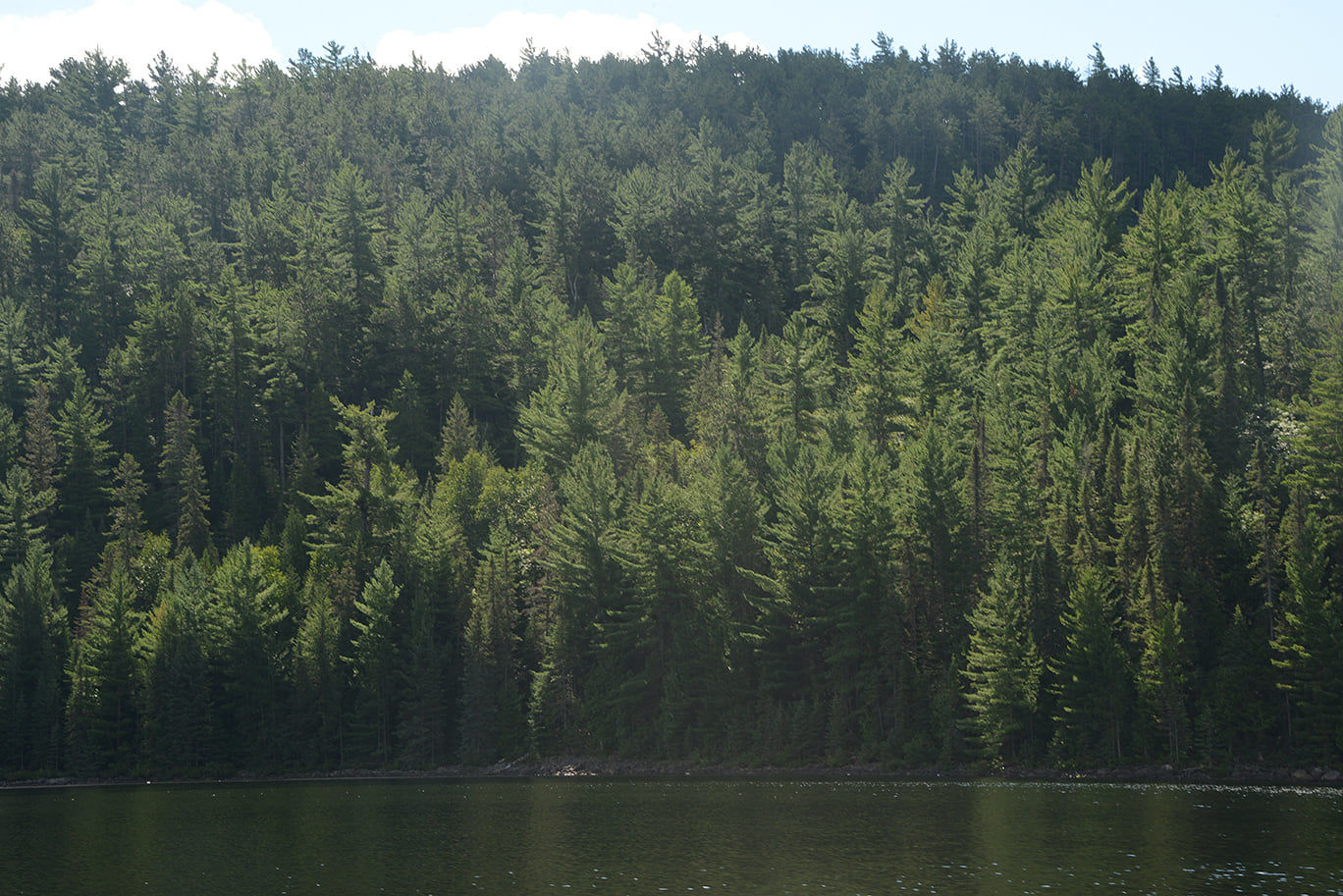
New ideas about old-growth forests; kayakers clean up in Georgian Bay; green alternatives to salt; Guelph development encroaches on rare species habitat.
On the cover
28 | Urban Nature
Plan Bee: In the wake of the mysterious honeybee die-off, a renaissance in urban beekeeping has blossomed. As keepers attest, worker bees improve biodiversity, pollinate our plants and produce the best honey you’ll ever taste.
By Brad Badelt
© Jim Flynn
36 | Bird Watch
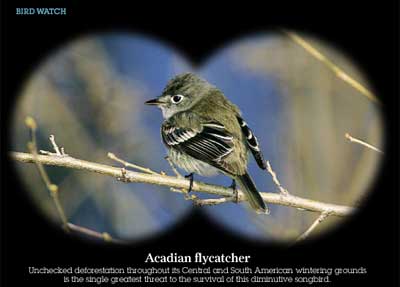
Acadian Flycatcher—Deforestation throughout Central and South America is the dominant threat to the survival of this diminutive songbird.
By Tim Tiner
36 | Bird Watch
Acadian Flycatcher—Deforestation throughout Central and South America is the dominant threat to the survival of this diminutive songbird.
By Tim Tiner
40 | In House
Ontario Nature announces its conservation winners; Friends of Mashkinonje befriend a park.
42 | Last Word
Some photographers bait wildlife to get that perfect shot. Is that right?
By Moira Farr
FEATURES

16 | Why We Can’t Save This Forest
What went wrong with the Environmental Assessment Act? How a law that was meant to protect the environment ended up helping industry.
By Conor Mihell
22 | The Killing Fields
New research reveals that a widely used class of agricultural pesticides is the likely culprit behind the deaths of hundreds of millions of birds. Worse still: Canada continues to market neurotoxic chemicals with the full knowledge of their impact.
By Paul Webster
33 | Ontario Nature’s Fourth Annual Youth Writing Contest
We asked kids in grades 7 and 8: What are you doing that has a positive impact on our environment? The winning essays show us the way.
ON Nature magazine is an award-winning quarterly that brings readers closer to nature by exploring Ontario’s natural species and spaces, and providing insight on pressing conservation issues.
The cost of an annual subscription is $50. If you are a senior citizen (65+) or a student, you can subscribe for a discounted rate of $40.
For just $9.95, you can purchase any single issue of the award-winning magazine. We also have back issues going back to 1970!
For more information or to purchase a single issue, please contact Kate, your member relations coordinator, at 416-444-8419 ext. 233 or kated@ontarionature.org.
Photos © Robert McCaw